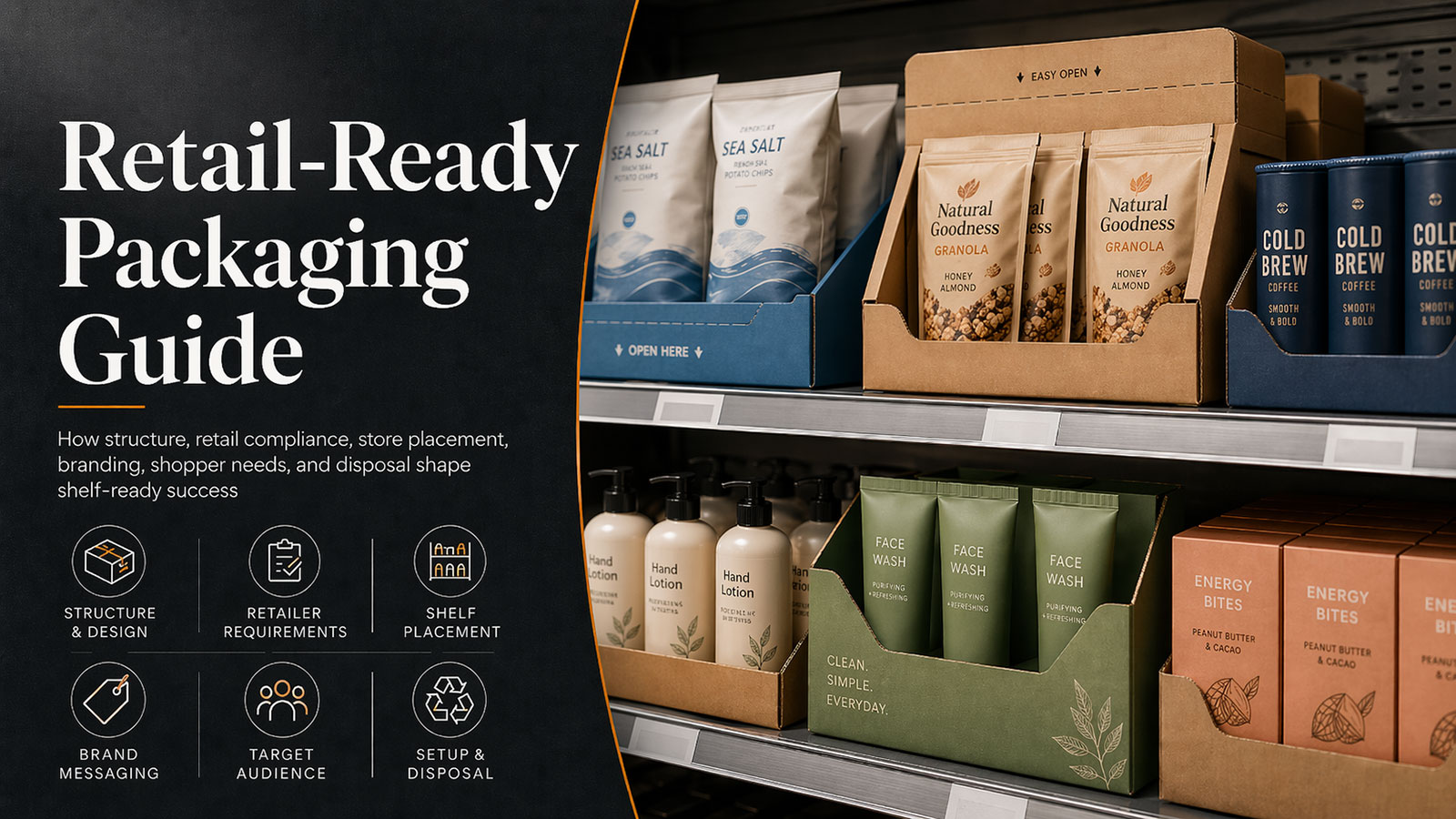

Walk into any supermarket, convenience store, or warehouse retailer, and you'll immediately notice one thing: the beverage aisle is a battle for attention. With hundreds of products competing for the same shopper's gaze, the brands that win are rarely those with the best product alone — they're the ones with the smartest retail presence.
- Why Beverage Brands Need Custom Display Solutions
- Standing Out in a Crowded Aisle
- Types of Custom Cardboard Beverage Displays
- Choosing the Right Display Format for Your Needs
- Floor Displays
- Counter Displays / PDQ Trays
- Pallet Displays
- Sidekick / Power Wing Displays
- Shipper Displays (Retail-Ready Packaging)
- Stackable / Modular Display Systems
- Key Design Elements That Drive Performance
- What Separates a Good Display from a Great One
- Materials & Sustainability
- Eco-Friendly Doesn't Mean Compromising on Strength
- The Kingwin Manufacturing Process — From Concept to Store
- What to Expect When You Partner with Kingwin
- Brief & Consultation
- Structural Design & Digital Mockup
- Physical Prototype
- Mass Production & Quality Control
- Packaging & Delivery
- Cost Factors & How to Optimize Your Budget
- Getting the Most Value from Your Display Investment
- Why Partner with Kingwin
- Your Dedicated Beverage Display Manufacturer
- Display Solutions by Beverage Category
- Tailored to Your Product Type
- Frequently Asked Questions
- Ready to Build Your Custom Beverage Display?
Research consistently shows that over 70% of purchase decisions are made at the point of sale. For beverage brands and distributors, this means your display is your salesperson. A well-designed, structurally sound, and visually compelling custom cardboard display doesn't just hold product — it communicates brand identity, guides shopper behavior, and drives impulse purchases at scale.
Yet many brands still rely on generic wire racks, shared shelf space, or one-size-fits-all displays that fail to reflect their brand or meet retailer expectations. The result? Lost visibility, lower sell-through rates, and missed growth opportunities.
At Kingwin, we've spent years helping beverage brands and distributors design, manufacture, and deliver custom cardboard display solutions that drive real results at retail. Whether you're launching a new energy drink line, scaling a craft beer brand across national chains, or entering a new retail channel, this guide will walk you through everything you need to know — from display types and design principles to manufacturing process and cost optimization.
Why Beverage Brands Need Custom Display Solutions
Standing Out in a Crowded Aisle
The beverage category is one of the most competitive in retail. A typical grocery store stocks thousands of SKUs across water, juice, soda, energy drinks, beer, wine, and spirits. Shelf space is finite, retailer requirements are strict, and shopper attention spans are measured in seconds.
The limitations of standard shelving are real:
-
Generic gondola shelves treat every brand equally — meaning no brand stands out
-
Shared fixtures offer zero brand storytelling opportunity
-
Standard shelves don't accommodate unique bottle shapes, multi-pack formats, or promotional messaging
-
Restocking is slow, and out-of-stock situations go unnoticed longer
Custom cardboard displays solve all of these problems simultaneously. Unlike permanent metal or plastic fixtures, corrugated displays are cost-effective, fast to produce, endlessly customizable, and fully recyclable — making them the preferred choice for seasonal campaigns, new product launches, and large-scale retail rollouts.
The business case is clear:
-
Increased visibility: Eye-level, branded displays capture attention before competitors do
-
Higher impulse purchase rates: Freestanding floor displays have been shown to increase sales lift by 20–40% compared to standard shelving
-
Retail compliance: Custom-built displays meet the exact specifications of each retail chain, reducing rejection rates at store level
-
Brand consistency: Every shopper touchpoint reinforces your brand identity, from color and typography to structural design
For distributors managing multiple brand accounts, offering clients a turnkey display solution also strengthens your value proposition and deepens long-term relationships.
Types of Custom Cardboard Beverage Displays
Choosing the Right Display Format for Your Needs
Not all beverage displays are created equal. The right format depends on your retail channel, product type, order volume, and in-store placement goals. Here's a breakdown of the six primary display types Kingwin manufactures:
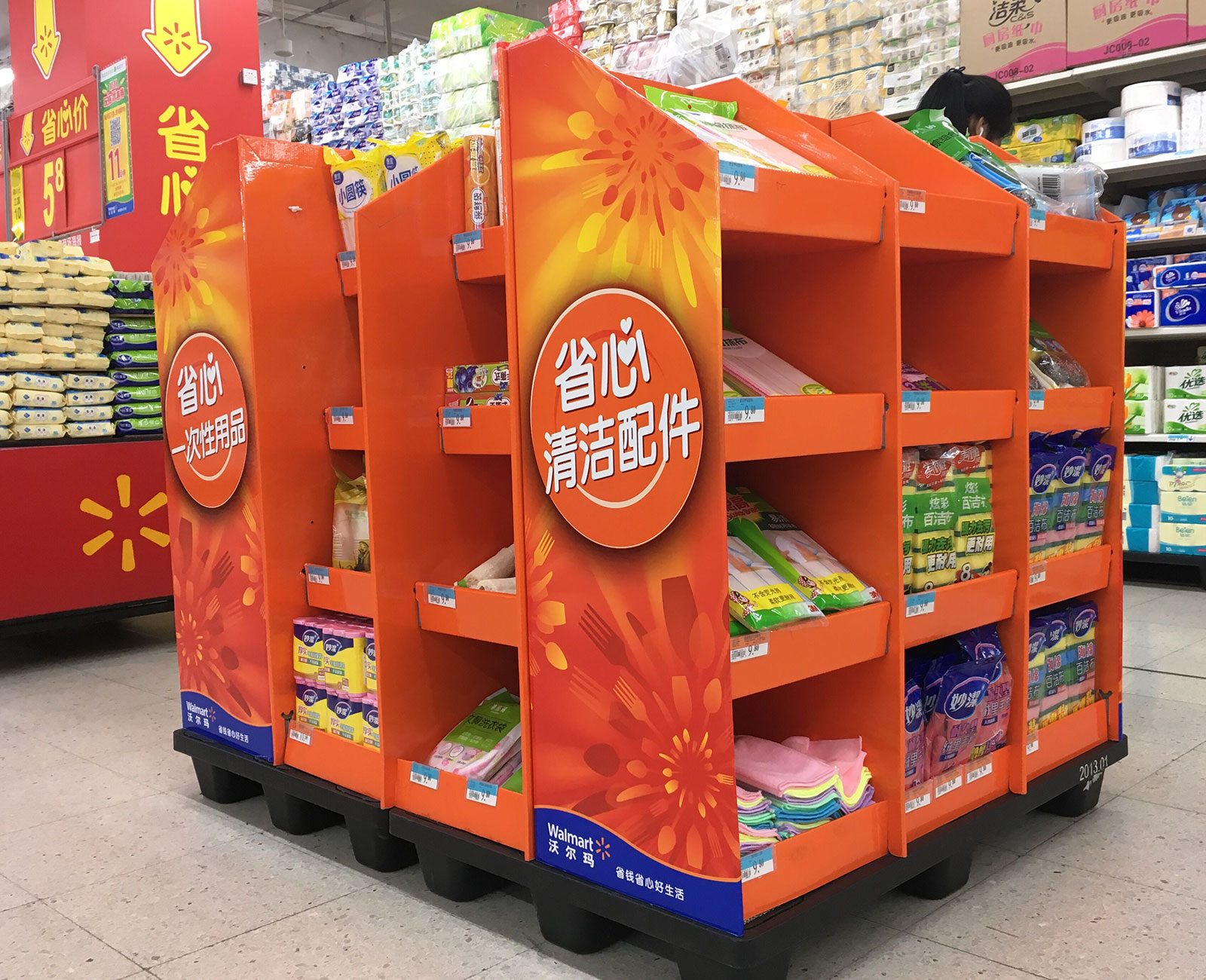
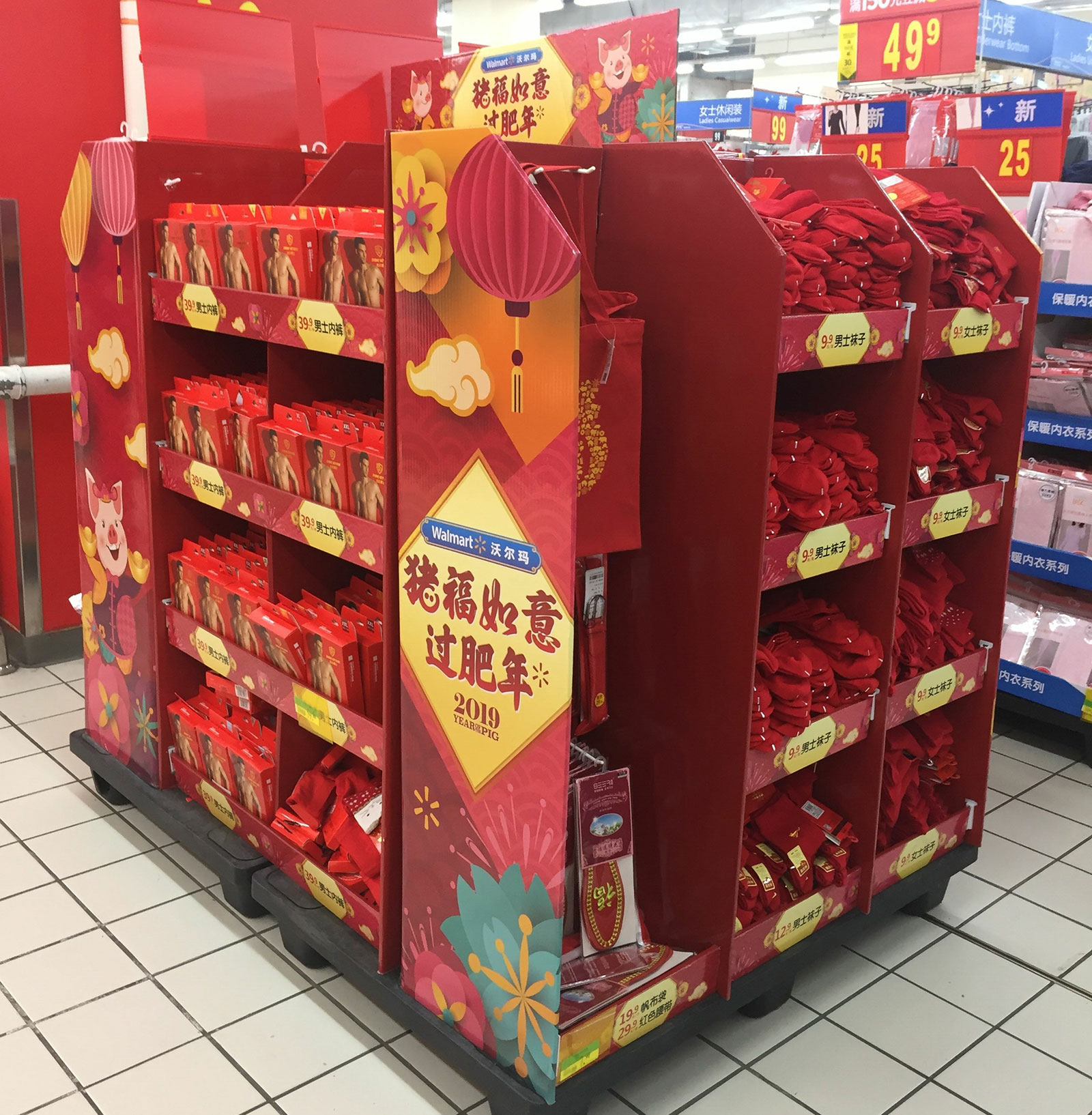
Floor Displays
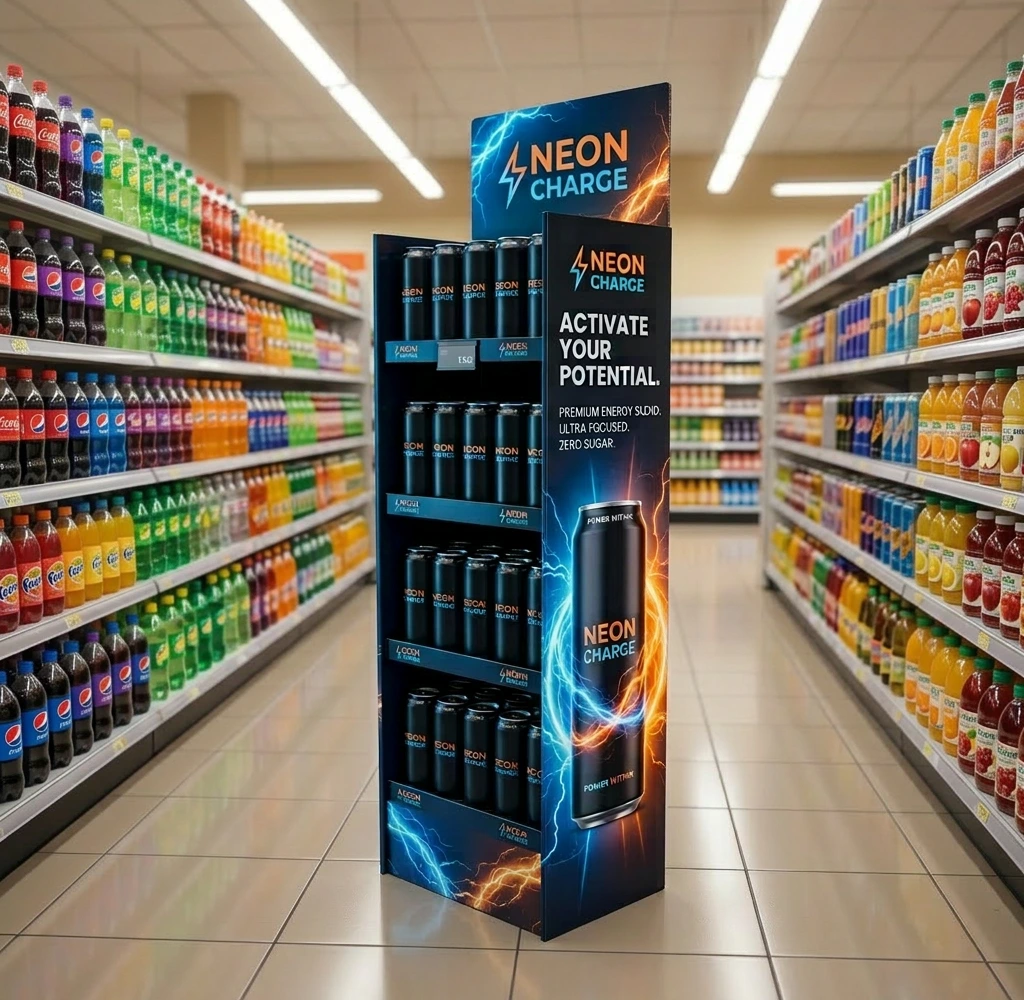
Floor displays are the most versatile and high-impact format. Standing 48–72 inches tall, these freestanding units are designed to hold significant product weight and attract attention from across the aisle.
Best for: Large supermarkets, natural grocery chains, and club retailers
Ideal products: Multi-packs, variety cases, bottled water, beer cases
Key advantage: Maximum brand real estate — full-height graphics panels on all four sides
Counter Displays / PDQ Trays
PDQ (Pretty Darn Quick) trays and counter displays are compact, retail-ready units designed for counter tops and checkout lanes. They ship pre-loaded with product and require zero assembly by store staff.
Best for: Convenience stores, gas stations, pharmacy checkout lanes
Ideal products: Single-serve energy drinks, premium shots, functional beverages, new product sampling
Key advantage: Instant retail presence — no planogram negotiation required
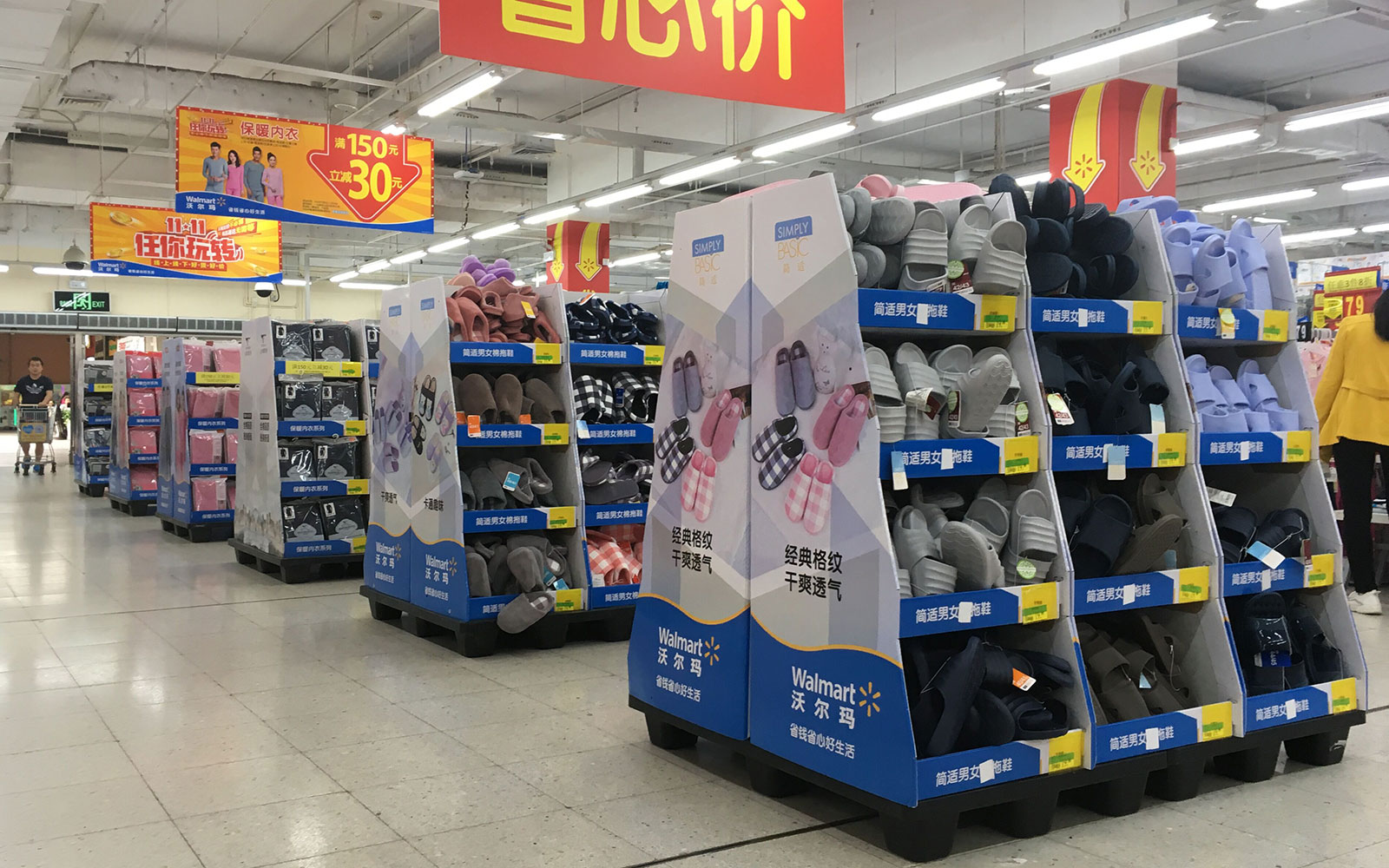
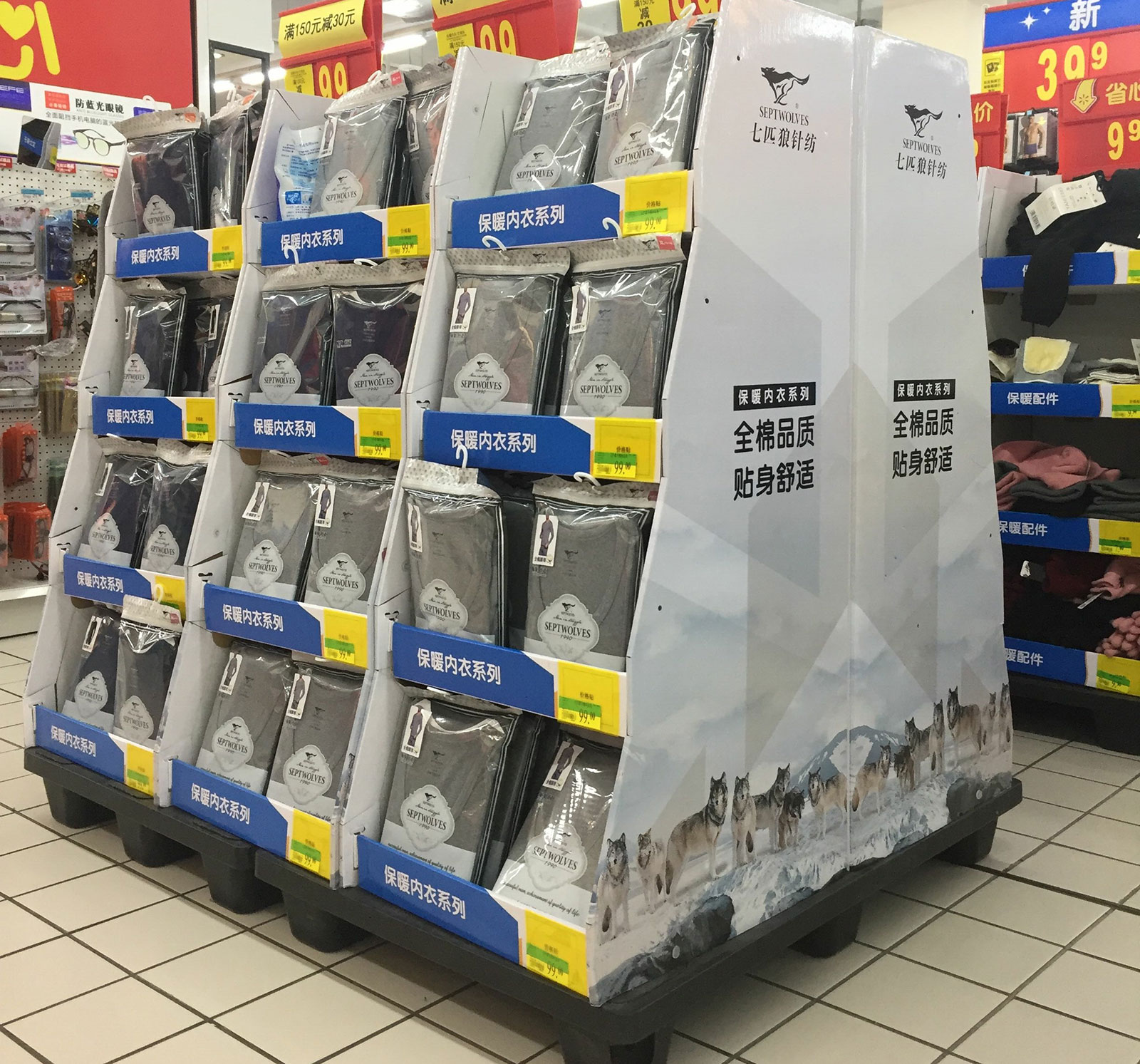
Pallet Displays
Pallet displays combine shipping and retail display into a single unit. Product is loaded at the factory, palletized, and shipped directly to the retail floor — where store staff simply remove the outer wrap and the display is ready.
Best for: Big box retailers, warehouse clubs (Costco, Sam's Club, BJ's), seasonal promotions
Ideal products: High-volume water, juice, beer cases, promotional multipacks
Key advantage: Zero in-store assembly labor, maximum efficiency for large retail partners
Sidekick / Power Wing Displays
Sidekick displays attach to the end of existing gondola shelves, effectively creating new display real estate without requiring dedicated floor space. They are one of the most cost-efficient ways to add brand presence.
Best for: Grocery stores, drug stores, mass market retailers
Ideal products: Single-serve cans, promotional bundles, premium spirits
Key advantage: Low cost per unit, easy retailer buy-in, effective for secondary placement
Shipper Displays (Retail-Ready Packaging)
Shipper displays are the most seamless solution available: the shipping carton becomes the display. Once the perforated front panel is removed, the box transforms into an open-front shelf-ready tray.
Best for: Convenience stores, smaller grocery formats, any channel where speed of setup matters
Ideal products: Single bottles, cans, four-packs and six-packs
Key advantage: Eliminates a step in the supply chain — fewer touchpoints, faster time to shelf
Stackable / Modular Display Systems
For brands that sell across multiple retail formats with varying space constraints, modular systems offer the flexibility to scale up or down. Individual display modules stack or connect to create customized configurations.
Best for: Brands with national distribution across diverse retail formats
Ideal products: Premium beverage lines, seasonal gift sets, multi-SKU product families
Key advantage: One structural design, infinite configurations — reduces tooling costs significantly
Key Design Elements That Drive Performance
What Separates a Good Display from a Great One
A structurally sound display that looks mediocre on the retail floor is a missed opportunity. Likewise, a beautifully printed display that collapses under product weight is a disaster. Great beverage displays achieve both — and the following design elements are what make the difference.
Structural Engineering
The foundation of any beverage display is its structural integrity. Beverages are among the heaviest retail products — glass bottles, aluminum cans, and multi-packs add up quickly. Your display must hold the full product load throughout its entire retail lifecycle, which could span 4–12 weeks.
Key structural considerations:
-
Corrugated flute selection: B-flute (3mm) offers excellent printability for PDQ trays; C-flute (4mm) provides superior stacking strength for floor displays; BC double-wall combines both for heavy pallet applications
-
Column stacking vs. interlocking design: How the display handles vertical compression determines whether it survives a warehouse stack
-
Die-cut precision: Clean, accurate cuts ensure assembly is consistent across thousands of units
-
Gluing and locking tabs: Critical for ensuring displays remain rigid after consumer handling
Print & Branding
Your display's graphics are your brand's voice at retail. Beverage consumers are visually driven, and the quality of your printing directly impacts perception of your product's quality.
Print process comparison:
| Process | Best For | Color Quality | Cost |
|---|---|---|---|
| Flexographic | High-volume runs, large formats | Good | Low per unit |
| Offset Litho | Premium graphics, brand-critical applications | Excellent | Medium |
| Digital | Short runs, prototypes, personalized displays | Excellent | Higher per unit |
Surface finishing options:
-
Matte lamination: Premium, tactile feel — ideal for craft beer, wine, and premium spirits
-
Gloss lamination: High-impact, vibrant — ideal for energy drinks, sports beverages
-
Spot UV coating: Selective glossy highlights on key brand elements (logos, product imagery)
-
Aqueous coating: Cost-effective protective layer for standard retail environments
Retail Compliance
One of the most overlooked aspects of display design is retailer compliance. Major chains including Walmart, Target, Kroger, and Costco all have specific requirements for display dimensions, weight limits, aisle clearance, and material specifications.
Non-compliant displays are rejected at store level — a costly mistake that delays your campaign and damages your relationship with the retailer.
Common compliance requirements include:
-
Maximum height limits (typically 60" for floor displays in most grocery chains)
-
Minimum base footprint dimensions for stability
-
Weight-bearing certification documentation
-
Recyclability and material disclosure requirements
-
Barcode placement and visibility standards
Kingwin's in-house compliance team maintains an up-to-date database of major retailer specifications and reviews all display designs before production begins — saving brands costly revisions and re-runs.
Shopper Experience Design
The best display isn't just structurally sound and visually impressive — it's also intuitive to shop. Shopper experience design considers how consumers interact with the display in real time.
Principles that drive results:
-
Product accessibility: Can shoppers easily grab product from every shelf level without disturbing the display?
-
Line of sight: Are hero products and brand messaging visible from 10 feet away?
-
Hierarchy of information: Brand name first, product name second, promotional message third
-
Replenishment ease: Can store staff restock quickly during busy periods?
Materials & Sustainability
Eco-Friendly Doesn't Mean Compromising on Strength
Sustainability is no longer a marketing differentiator — for many major retailers and CPG brands, it's a procurement requirement. Cardboard displays are inherently more sustainable than metal or plastic alternatives, but the specifics of your material choices matter.
Corrugated Flute Guide
| Flute Type | Thickness | Best Application |
|---|---|---|
| E-Flute | ~1.5mm | PDQ trays, counter displays, fine printing |
| B-Flute | ~3mm | Shipper displays, retail-ready packaging |
| C-Flute | ~4mm | Floor displays, standard shipping boxes |
| BC Double-Wall | ~7mm | Pallet displays, heavy-load floor units |
| EB Double-Wall | ~4.5mm | Premium displays requiring both strength and print quality |
FSC Certification & Recycled Content
Forest Stewardship Council (FSC) certification verifies that the wood fiber used in your corrugated materials comes from responsibly managed forests. Many major retailers — including Walmart and Target — now require or strongly prefer FSC-certified packaging and display materials from their suppliers.
Kingwin uses FSC-certified corrugated materials across our entire beverage display product line. We can provide full chain-of-custody documentation to support your sustainability reporting and retailer compliance requirements.
End-of-Life & Recyclability
Unlike plastic or metal fixtures that require special disposal, corrugated cardboard displays are:
-
Accepted in standard cardboard recycling streams at all major retailers
-
Biodegradable if they enter the waste stream
-
Made from up to 70–80% recycled content depending on specification
-
Carbon-efficient — corrugated manufacturing has a significantly lower carbon footprint per display than injection-molded plastic equivalents
For brands communicating sustainability credentials to consumers, a brief "Please Recycle This Display" message printed on the structure itself reinforces your commitment authentically.
The Kingwin Manufacturing Process — From Concept to Store
What to Expect When You Partner with Kingwin
We've refined our manufacturing process over 15+ years to make it as streamlined and transparent as possible for brands and distributors working on tight deadlines and specific retail requirements. Here's exactly what happens from the moment you contact us to the moment your displays arrive at the retailer.
Brief & Consultation
Every project starts with a conversation. You share:
-
Product dimensions and weight
-
Target retail channel and retailer compliance requirements
-
Desired display type and approximate quantity
-
Brand guidelines (logos, colors, key messaging)
-
Timeline and destination port/warehouse
Our team responds within 24 hours with an initial feasibility assessment and preliminary cost estimate — at no charge.
Structural Design & Digital Mockup
Our structural engineers create a full CAD dieline and 3D digital mockup based on your brief. You'll see exactly how the display will look assembled, with your graphics applied, before we produce a single physical sample.
We review the design against your target retailer's compliance specifications at this stage, flagging any adjustments needed before they become costly.
Physical Prototype
A physical prototype is produced in our sample room and shipped to your team for real-world evaluation:
-
Load test with actual product
-
Visual review of graphics and print quality
-
Assembly and disassembly ease check
-
Structural stability assessment
You can request up to two rounds of revisions at this stage before final approval.
Mass Production & Quality Control
Once the prototype is approved, we move to full production. Our QC process includes:
-
Incoming material inspection: Board weight, moisture content, caliper thickness
-
Print quality check: Color Delta E ≤ 3 against approved proof
-
Dimensional inspection: ±2mm tolerance on all cut dimensions
-
Load test sampling: Random units from each production run load-tested to 150% of rated capacity
-
Pre-shipment inspection: Available for third-party auditing upon request
Packaging & Delivery
Displays ship flat-packed by default — maximizing container utilization and minimizing freight costs. For PDQ trays and shipper displays, we offer pre-loaded options where product is inserted at our facility before export.
Flat-pack vs. pre-assembled:
| Option | Freight Cost | Setup at Destination | Best For |
|---|---|---|---|
| Flat-pack | Lower | 5–15 min per display | Large orders, warehouse distribution |
| Semi-assembled | Medium | 1–3 min per display | Time-sensitive retail launches |
| Pre-loaded | Higher | Zero setup | PDQ trays, shipper displays |
For urgent programs, expedited production and air freight options are available — contact us to discuss your specific timeline.
Cost Factors & How to Optimize Your Budget
Getting the Most Value from Your Display Investment
Custom cardboard displays represent one of the highest-ROI investments in retail marketing — but only when procurement is handled strategically. Here's what drives cost and how to optimize it.
Primary Cost Drivers
-
Board specification: Double-wall BC flute costs ~30–40% more per unit than single-wall C-flute — but may be necessary for your product weight
-
Print colors and coverage: Full-color offset printing with high ink coverage costs more than two-color flexo; matte lamination adds cost but elevates perceived quality
-
Display dimensions: Larger surface area = more material and more print coverage = higher unit cost
-
Order quantity (MOQ): The single biggest lever on unit cost — doubling your order quantity typically reduces unit price by 25–35%
-
Structural complexity: Interlocking modular systems with many die-cut components cost more than simple four-sided floor displays
-
Finish and coating: Spot UV and foil stamping add cost but are effective for premium tier products
Cost Optimization Strategies
Standardize your structure, customize your graphics. If you run multiple seasonal campaigns or product lines, using the same base structural template with different printed graphics significantly reduces tooling and engineering costs over time.
Plan ahead for seasonal peaks. Orders placed 10–12 weeks before your in-store date avoid rush production fees and give time for two rounds of sample revisions without timeline pressure. Q4 holiday programs and summer beverage promotions book up quickly — early engagement is critical.
Consolidate multiple display types into one shipment. If you need both floor displays and PDQ trays for the same launch, consolidating into a single production order and ocean freight shipment saves on logistics costs and simplifies coordination.
Use flat-pack shipping wherever possible. Flat-packed displays can reduce container requirements by 60–70% compared to pre-assembled units — representing substantial freight savings on large orders.
Why Partner with Kingwin
Your Dedicated Beverage Display Manufacturer
Choosing the right manufacturing partner is as important as choosing the right display type. Here's what sets Kingwin apart as a long-term partner for beverage brands and distributors.
Many brands make the mistake of working with multiple vendors — a structural designer here, a print house there, a freight forwarder somewhere else. Every handoff is a risk: miscommunication, timeline delays, quality inconsistencies.
Kingwin handles the entire process under one roof:
-
✅ Structural engineering & compliance review
-
✅ Graphic design support
-
✅ Sample production
-
✅ Mass production & QC
-
✅ Export documentation
-
✅ Freight coordination
One point of contact. One quality standard. One timeline.
Display Solutions by Beverage Category
Tailored to Your Product Type
Different beverage categories have different structural requirements, retail environments, and brand positioning needs. Here's how Kingwin approaches each:
| Category | Recommended Display Types | Kingwin Solution Highlights |
|---|---|---|
| Beer & Craft Brew | Pallet Display, Shipper Display, Floor Display | BC double-wall construction; supports 30+ lbs; premium matte lamination for craft positioning |
| Energy Drinks | Floor Display, Counter PDQ, Sidekick | High-saturation flexo or offset printing; gravity-feed PDQ for fast restocking; bold graphic panels |
| Wine & Spirits | Sidekick, Stackable Floor, Counter Display | Anti-tip structural design; premium spot UV and foil options; elegant matte finish |
| Bottled Water & Juice | Pallet Display, Shipper Display | High-volume, cost-optimized production; retail-ready with easy-open perforations |
| Functional & Premium Beverages | Counter PDQ, Floor Display, Shipper | Short-run flexibility; premium surface finishes; clean structural aesthetic for health/wellness positioning |
| Canned Cocktails & Hard Seltzer | Floor Display, Shipper Display, Sidekick | Vibrant full-color printing; modular configurations for multi-SKU product families |
Frequently Asked Questions
What is your minimum order quantity (MOQ)?
Kingwin's standard MOQ is 500 units per display design. For brands testing a new display concept or entering a new retail channel, we recommend starting with a smaller trial run before scaling to full volume.
How do I know if my display will be accepted by my retailer?
Our compliance team will review your target retailer's specifications during the design phase. We maintain current compliance documentation for major U.S. retailers and flag any issues before production begins.
Can you match our brand's exact Pantone colors?
Yes. We print to Pantone-matched color standards with Delta E ≤ 3 tolerance. For brand-critical color matching, we recommend offset lithographic printing for the highest accuracy.
Do you provide design services if we don't have an in-house designer?
Yes. Kingwin offers full structural and graphic design support as part of our project service. We work from your brand guidelines, product photography, and messaging brief to develop complete, print-ready artwork.
What certifications can you provide for our retailer submissions?
We can provide ISO 9001 certification, FSC chain-of-custody documentation, material safety data sheets, and load-test reports. Custom testing certifications can be arranged upon request.
Ready to Build Your Custom Beverage Display?
The right display solution can transform your retail presence, increase sell-through velocity, and give your brand the in-store real estate it deserves. At Kingwin, we combine manufacturing expertise, structural engineering, and world-class printing to deliver displays that perform — on time, on budget, and to your retailer's exact specifications.