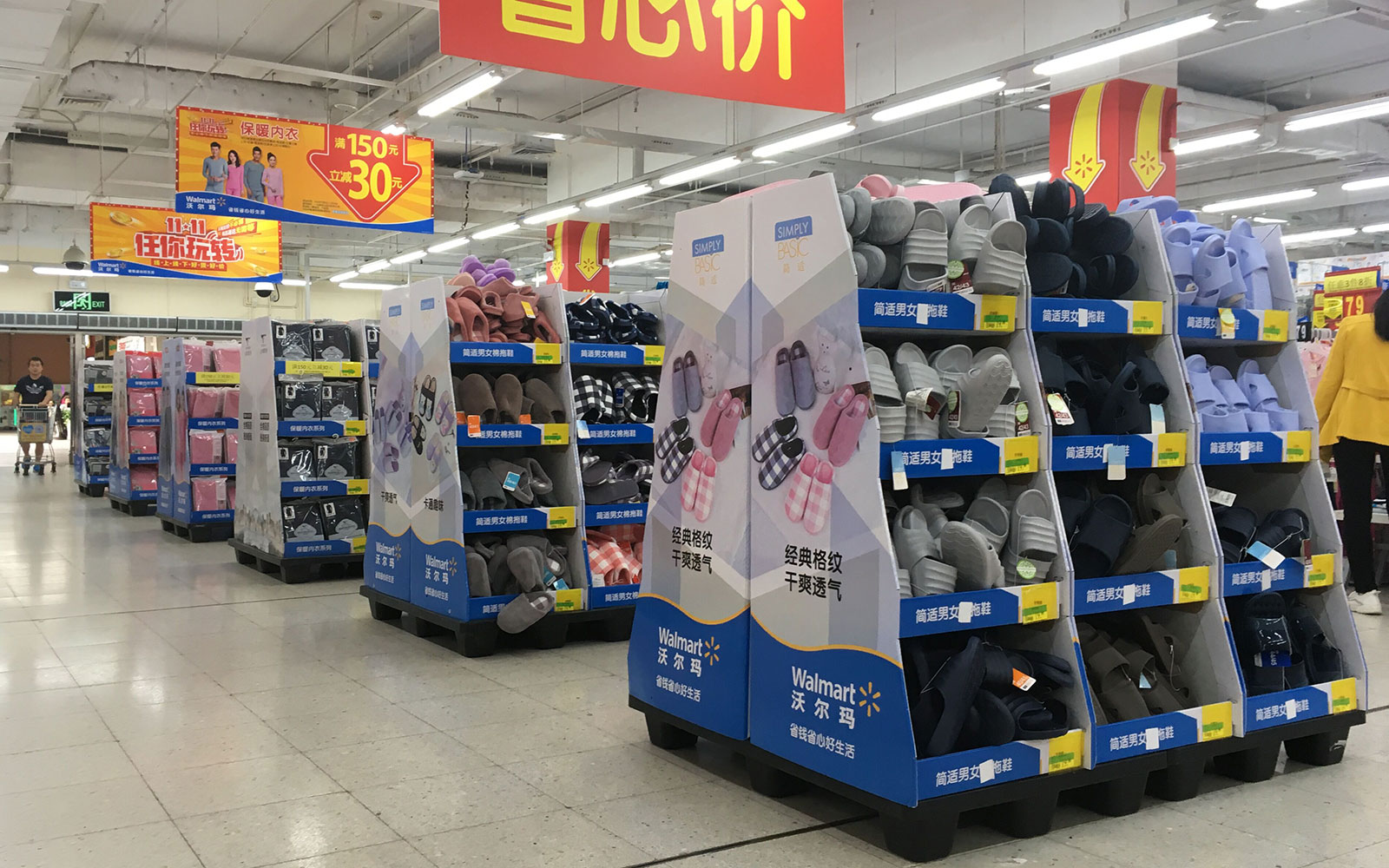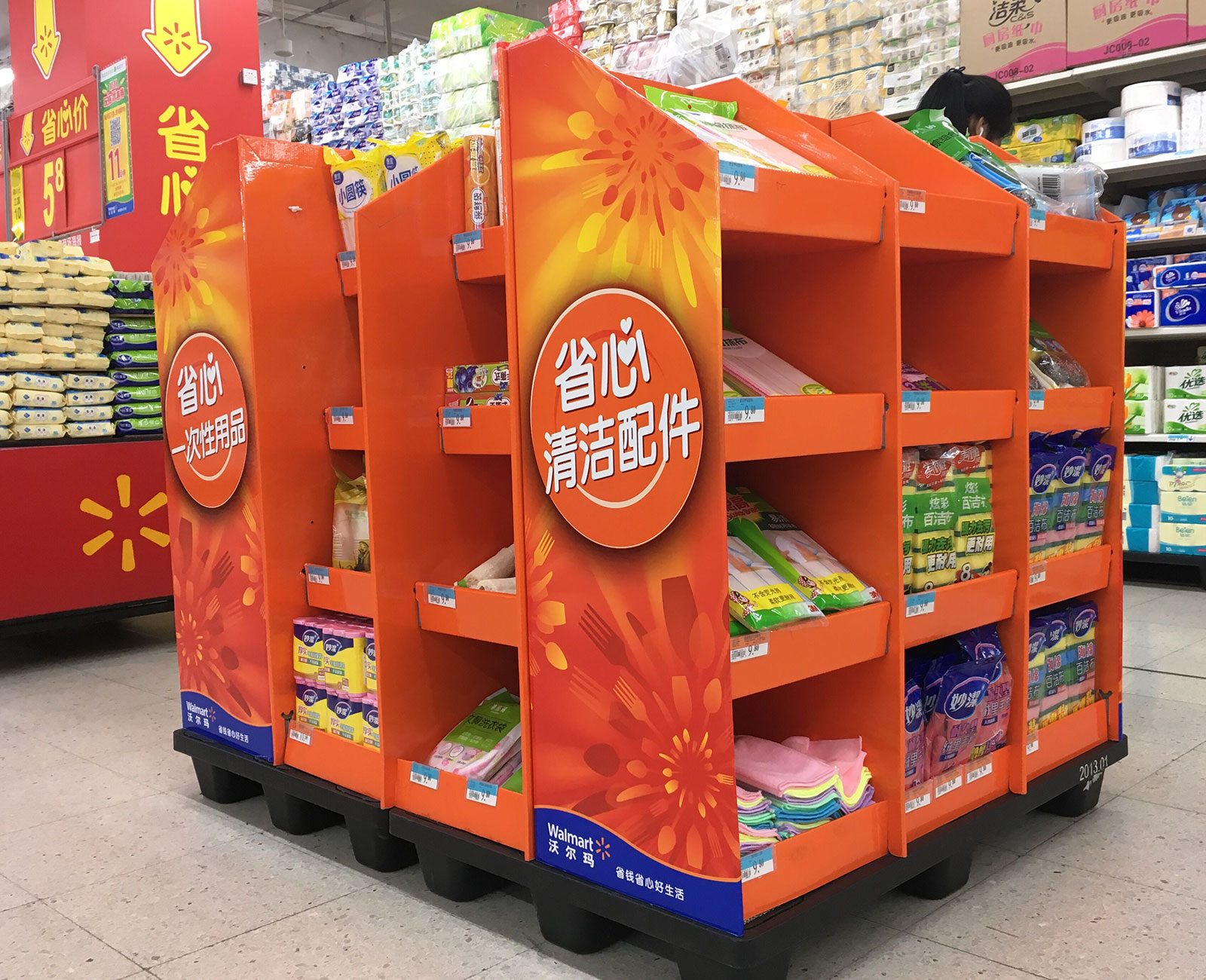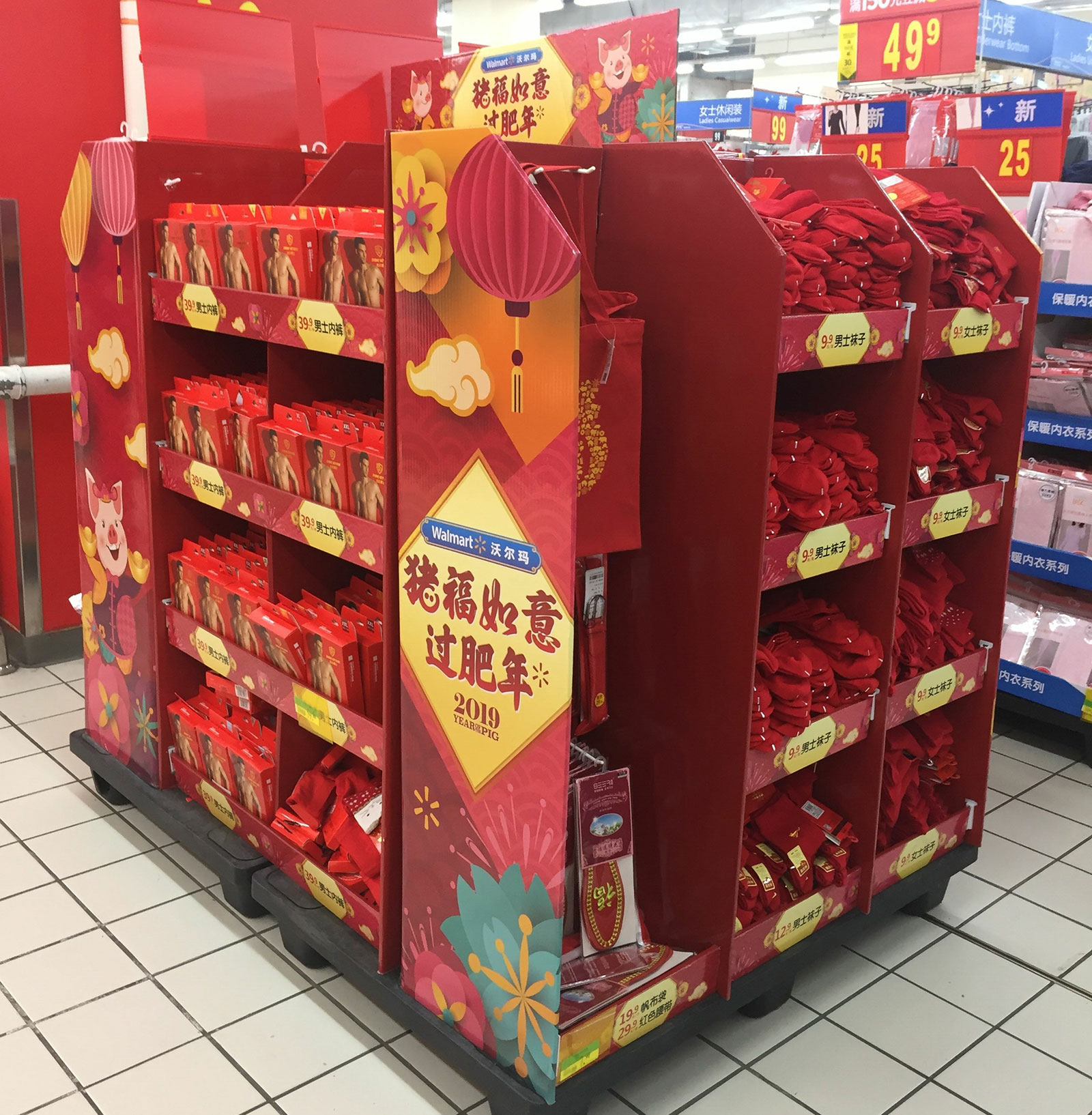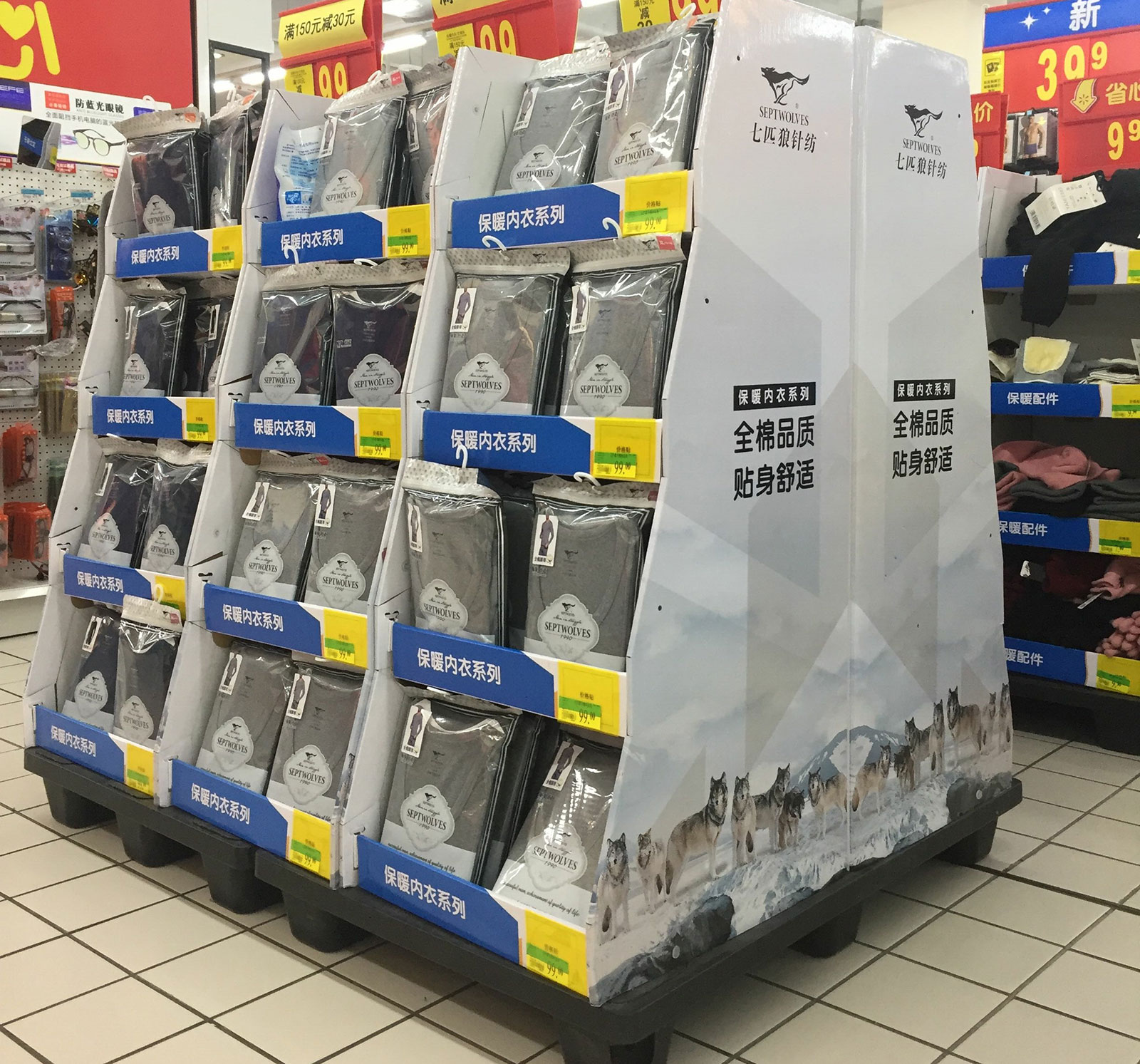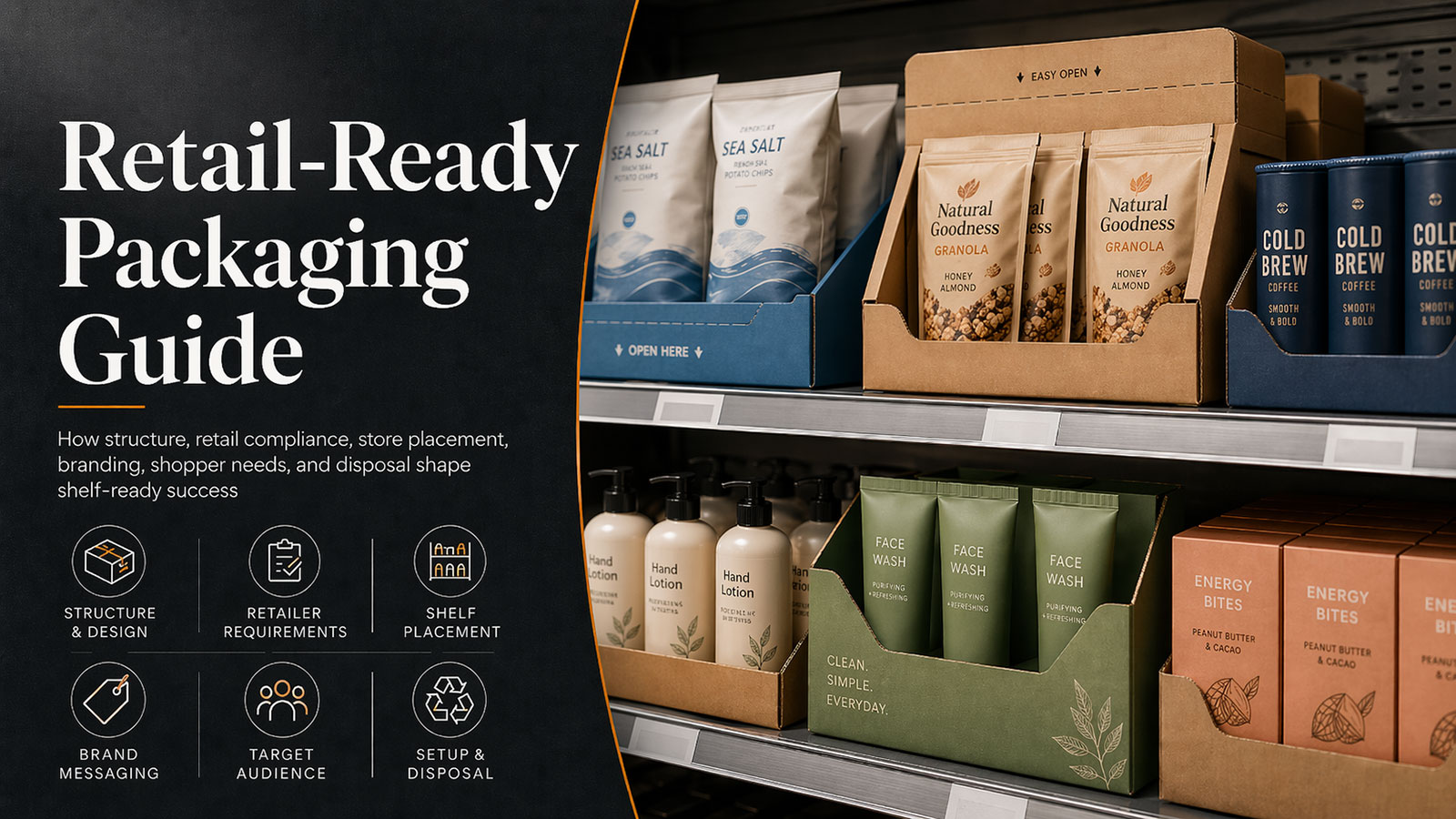

In the world of music retail, the difference between a sale and a missed opportunity often comes down to a few inches of counter space. Point-of-purchase (POP) displays — especially compact counter displays — are one of the most effective tools a brand can use to capture attention, communicate product variety, and drive impulse purchases right at the moment a customer is ready to buy.
- About Ernie Ball: A Brand Built on Sound
- The Brief: Standing Out at Point-of-Sale
- The Design: Where Brand Identity Meets Retail Function
- Structural Features Built for Real-World Retail
- Why Cardboard Counter Displays Work for Music & Specialty Retail
- The Result: A Display That Performs as Well as Ernie Ball's Strings
- Key Takeaways for Brands Designing Counter Displays
Few brands understand this better than Ernie Ball. As one of the most iconic names in the music industry, Ernie Ball needed a retail display solution that could match its bold brand identity, organize its diverse product range clearly, and perform reliably across thousands of retail locations worldwide.
About Ernie Ball: A Brand Built on Sound
Founded in 1962, Ernie Ball has grown into the world's leading manufacturer of premium guitar strings and accessories . The brand's legendary Slinky strings have been trusted by some of the greatest musicians of all time — from Paul McCartney and Eric Clapton to Keith Richards and John Mayer — making it a household name in music stores across the globe.
Ernie Ball's product catalog spans a wide range of string lines designed for different tones, playing styles, and instruments. Products like the Original Slinky, Slinky Cobalt, and Slinky M-Steel each serve distinct musician needs — but they share the same compact packaging format and are typically sold side by side on the same retail shelf or counter.
This creates both an opportunity and a challenge: how do you display multiple similar-looking products in a small retail space so that customers can instantly understand the differences and choose the right one?
The Brief: Standing Out at Point-of-Sale
Music retail is competitive. A guitar shop counter or checkout area is filled with picks, capos, tuners, string winders, and dozens of other accessories competing for the same limited real estate. String packages, being small and lightweight, are especially easy to overlook when simply hung on a peg wall or tossed in a bin.
Ernie Ball partnered with a custom display manufacturer to design a counter display that could solve this problem head-on . The goals were clear:
-
Showcase multiple string product lines in a single, organized unit
-
Communicate the Ernie Ball brand identity instantly and confidently
-
Keep the display compact enough for a checkout counter or front-of-store table
-
Make it easy for store staff to restock and for customers to self-select
The Design: Where Brand Identity Meets Retail Function
The resulting counter display is a masterclass in aligning structural design with brand personality. Rather than opting for a generic, off-the-shelf display unit, Ernie Ball worked with designers to create a piece that feels unmistakably Ernie Ball from across the room .
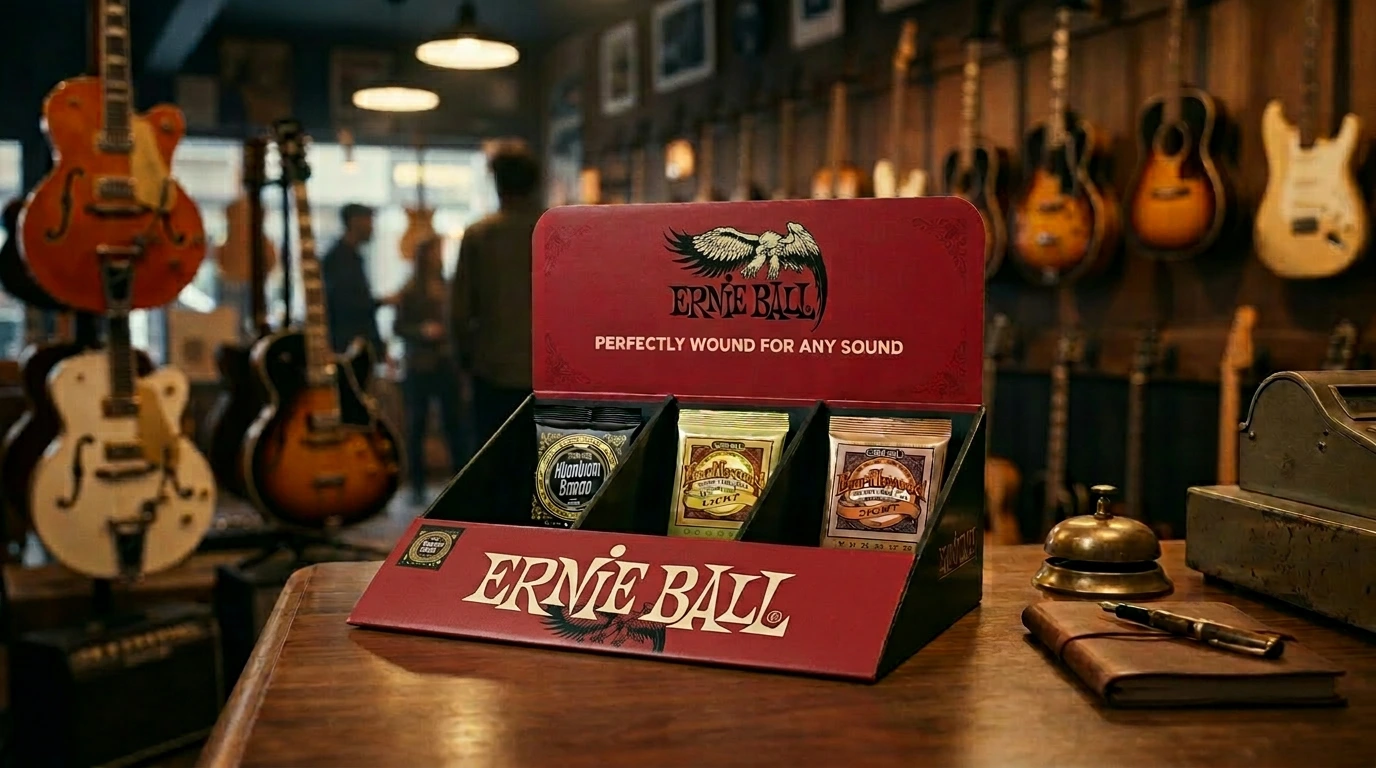
The display features the brand's trademark funky, energetic typography and its signature bold color palette — lime green, black, white, and hot pink . These colors are not just decorative; they serve a functional purpose by clearly segmenting the display into distinct product zones. Each of the three pockets is assigned a different color scheme that corresponds to a specific string line: Original Slinky, Slinky Cobalt, and Slinky M-Steel .
This alternating color logic does two things simultaneously. First, it reinforces Ernie Ball's existing packaging design, so customers who already know the brand can find their preferred strings instantly. Second, it educates new customers — the visual differentiation between zones communicates that these are distinct products, not the same item in different quantities.
The display's graphic panels are printed with clean, high-contrast artwork that remains legible even in the mixed, often dim lighting conditions common in music retail environments.
Structural Features Built for Real-World Retail
A great-looking display means nothing if it falls apart after a week on the counter. The Ernie Ball counter display was engineered with durability and practicality in mind .
Sturdy dividers between each product pocket are made from extra-thick corrugated cardboard. This prevents the small, lightweight string packages from tipping sideways, mixing between sections, or collapsing under the weight of a full restock. Even when a section is nearly empty, the remaining packages stay upright and neatly presented .
Lightweight construction is another intentional feature. Since string packaging itself is extremely light, the display does not need to bear significant load — allowing designers to keep the unit lightweight and easy to ship flat-packed, reducing freight costs for both the brand and its retail partners .
Compact footprint means the display fits comfortably on a checkout counter, a front-of-store display table, or beside a guitar wall without dominating the surrounding space. This versatility is critical for music retailers that range from small independent shops with tight counter space to large music superstores with dedicated POP zones .
Why Cardboard Counter Displays Work for Music & Specialty Retail
Cardboard counter displays have become a go-to solution for brands across many industries, and for good reason. Compared to permanent acrylic or metal display fixtures, custom corrugated cardboard units offer several compelling advantages:
-
Cost-effectiveness: Cardboard displays are a fraction of the cost of permanent fixtures, making them viable for wide distribution across hundreds or thousands of retail locations simultaneously
-
Sustainability: Corrugated cardboard is recyclable and can be produced with eco-friendly materials, aligning with growing retailer and consumer demand for greener packaging solutions
-
Speed to market: Custom cardboard displays can be designed, prototyped, and produced quickly — ideal for product launches, seasonal promotions, or new market entries
-
Easy assembly and restocking: Most counter display designs ship flat and can be assembled in minutes by store staff, with no tools required
-
Brand flexibility: Full-color printing on cardboard allows for rich, vibrant graphics that accurately represent brand colors, fonts, and imagery
For a brand like Ernie Ball, which distributes through music retailers globally, these advantages translate directly into meaningful operational savings and stronger in-store brand presence at scale.
The Result: A Display That Performs as Well as Ernie Ball's Strings
The Ernie Ball counter display succeeds because it was designed with a precise understanding of the product, the customer, and the retail environment . It doesn't just hold strings — it sells them.
By organizing three distinct product lines into clearly color-coded sections, the display removes friction from the buying decision. A guitarist walking up to the counter knows immediately which strings belong to which line, what's available, and what distinguishes each option. That clarity converts browsers into buyers.
For retail staff, the display is equally valuable. A quick glance tells them which section needs restocking, and the sturdy pockets keep products organized without constant maintenance.
Key Takeaways for Brands Designing Counter Displays
The Ernie Ball case is an excellent reference point for any brand — including packaging and display manufacturers — looking to develop effective counter displays. Here are the most important lessons:
-
Design to your brand, not a template. Generic displays blend into the background. Custom typography, brand colors, and signature design elements make a display instantly recognizable and reinforce brand loyalty.
-
Let structure serve the product. Understand the physical properties of what you're displaying — weight, size, fragility — and engineer the display around those realities, not around what's easiest to manufacture.
-
Use visual segmentation to guide decisions. Color-coded sections, clear labels, and logical product groupings reduce shopper confusion and speed up purchase decisions.
-
Prioritize placement versatility. A display that can work on a checkout counter, a demo table, and beside a product wall gives retailers more options and increases the chance of premium placement.
-
Think about the full supply chain. Flat-pack shipping, easy assembly, and recyclable materials all reduce cost and friction for both brands and retail partners.
Custom cardboard counter displays like the one Ernie Ball commissioned prove that the right structural packaging is not just a container — it is a silent salesperson, working 24 hours a day in every store where the brand is sold.