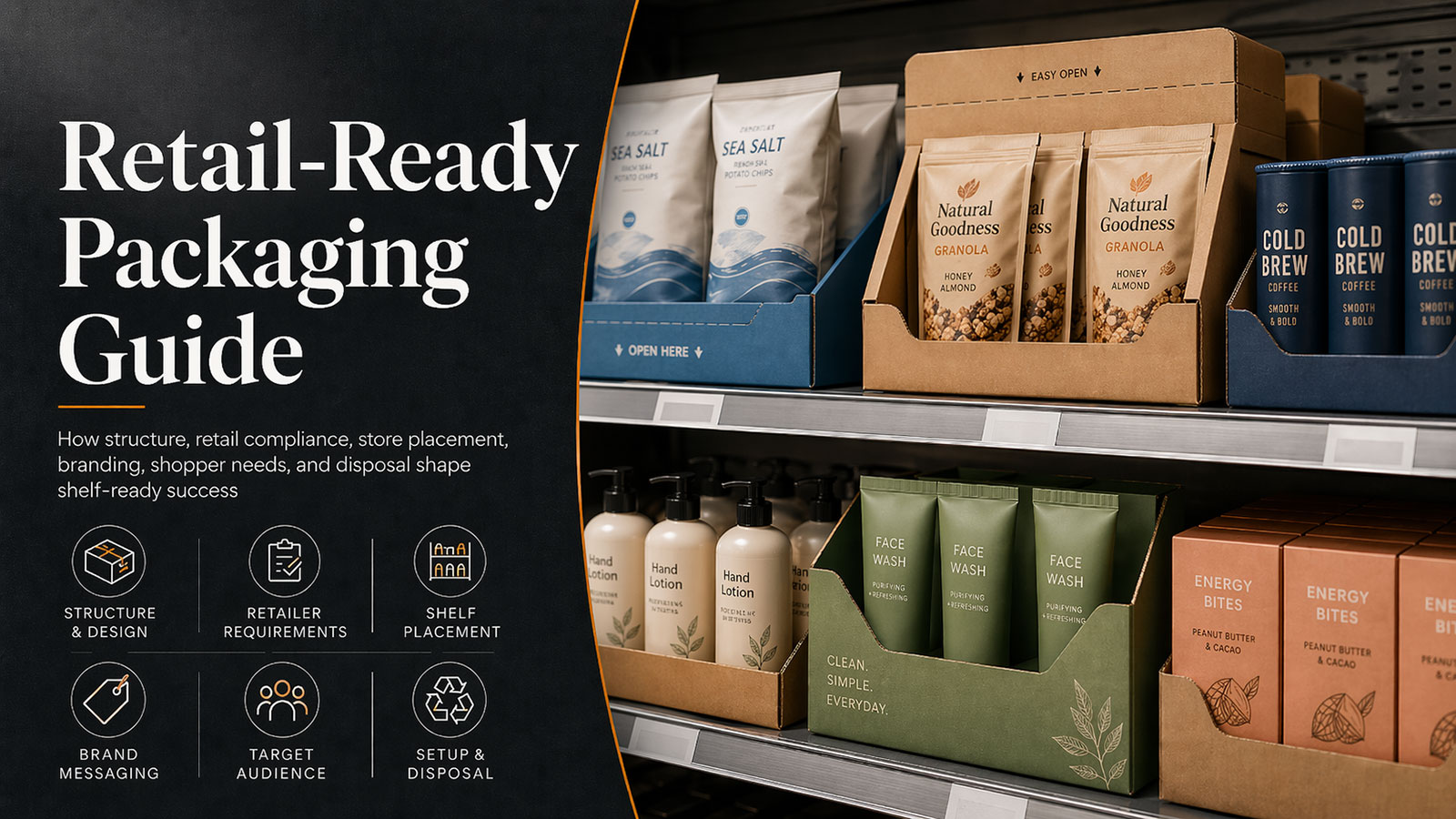

A new product launch is one of the highest-stakes moments a brand will face. For startups and emerging players especially, the first 8–12 weeks on shelf are often the deciding factor between a lasting SKU and a quiet discontinuation. Retailers watch sales velocity closely—and if a new item doesn't move, it gets pulled to free up space for something that does.
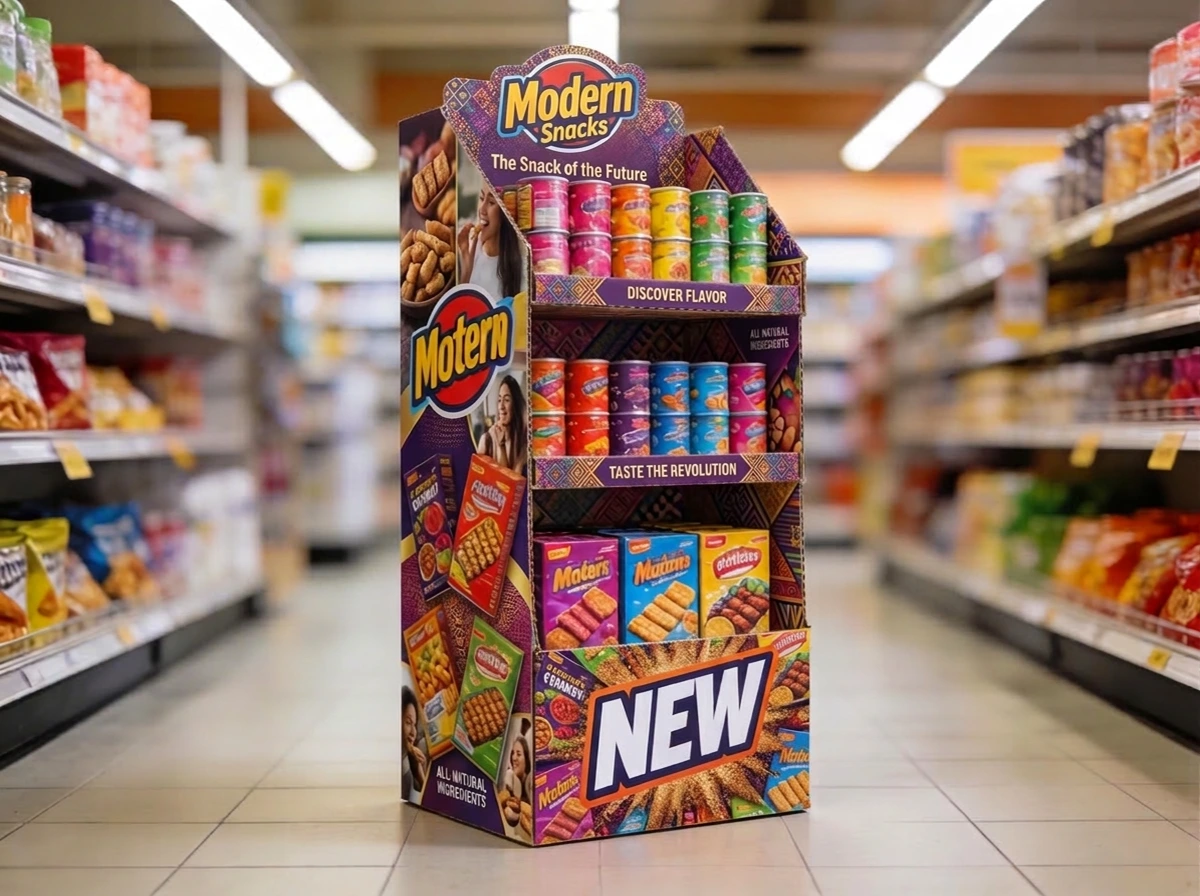
The problem is obvious: getting noticed in a crowded store costs money. Permanent fixtures are expensive to produce and expensive to place. Slotting fees at major grocers can run thousands of dollars per SKU, per store. For brands operating on lean budgets, that math simply doesn't work.
- Why the First Few Weeks Are Won or Lost on the Floor
- What Retailers Actually Need from a Display
- Spending Smart: Where Budget Goes Wrong
- Choosing the Right Display Format
- Paper Displays Versus Permanent Fixtures: The Honest Comparison
- Design That Works at Shelf Speed
- Placement and Operations: Where Good Displays Fail
- Testing Before Scaling
Corrugated paper temporary displays solve this. At Kingwin Paper, we've helped hundreds of emerging brands get product off the standard shelf and in front of shoppers at a fraction of the cost of traditional fixtures—and when executed well, they're barely distinguishable from higher-end alternatives.
Why the First Few Weeks Are Won or Lost on the Floor
Retailers don't just evaluate how well a product sells overall—they track Sales Per Point of Distribution (SPPD), a metric that measures how much revenue each stocked location generates. A new product buried in a standard shelf slot rarely builds SPPD fast enough to survive. A freestanding display or end-cap placement changes the equation by multiplying the number of shoppers who actually see the product.
There's also a behavioral reason displays work that often gets overlooked: most grocery and convenience store shoppers are on autopilot. They walk the same path, reach for the same brands, and tune out anything that doesn't interrupt their routine. A display placed at an aisle end or near checkout doesn't ask for attention—it takes it. That's not a minor advantage; it's how new products earn trial from consumers who would never have noticed them otherwise.
The 7-touches principle from traditional marketing holds up in retail too. A shopper who sees your product only once may not act. One who sees it at the entrance, again on a side hanger near a complementary category, and again at checkout is far more likely to pick it up. Secondary placements—end caps, clip strips, power wings—account for roughly 40% of in-store impulse sales, and that figure consistently holds across categories from snacks to personal care.
What Retailers Actually Need from a Display
Brands often design displays around what looks good in a mockup. Retailers think differently. What wins a prime location in a busy store is a display that makes the store associate's job easier, not harder.
Pre-assembled or near-ready displays that can be set up in minutes are far more likely to be used correctly. Displays that require more than a few steps to assemble tend to be rushed, set up incorrectly, or left in the stockroom. A small footprint matters too—floor space in retail is expensive, and a display that delivers strong turnover per square foot is easy to justify keeping around. Finally, restocking needs to be intuitive: open-front trays, finger-pull holes, and visible fill levels all reduce the time a shelf sits empty.
None of this requires custom engineering. It requires thinking through the store associate's experience when you're designing the structure. Kingwin Paper's structural engineers review every display project with in-store assembly in mind—because a display that's painful to set up is a display that doesn't get set up right.
Spending Smart: Where Budget Goes Wrong
Most overspending on display programs comes from one of three places: over-engineering the structure, mismatching material durability to campaign length, or ignoring hidden costs until the invoice arrives.
For a four-week promotional window, there's no reason to spec materials that last two years. Corrugated paper is appropriately durable for short-cycle promotions and costs 30–50% less than comparable metal or plastic units. Flat-pack shipping cuts logistics costs further, which matters when you're distributing across dozens or hundreds of stores.
Before finalizing a budget, account for the full cost of ownership: design, dieline production, printing, assembly (whether at the factory or in-store), product loading, and freight. Unit price alone is misleading. A slightly cheaper display that costs more to ship, takes longer to assemble, and arrives damaged at one in five stores is not actually cheaper.
One underrated cost driver is SKU complexity. Launching with multiple variants or flavors in a single display adds confusion for shoppers, increases replenishment errors, and makes the display structure more complicated to produce. Single-SKU displays convert better, cost less, and are simpler to restock correctly.
Choosing the Right Display Format
The format should follow the category and retail environment, not the other way around. Kingwin Paper offers standardized structural templates across all major display types—avoiding custom tooling fees while still covering the full range of retail scenarios.
Counter displays work best for small-format products—snacks, supplements, beauty accessories—positioned at checkout or service counters. The barrier to trial is low, impulse rates are high, and material cost is minimal.
Power wings attach to existing gondola shelves without occupying floor space. They're ideal for cross-selling: a wing hanging off the chip aisle carrying a new dip, or off the coffee section carrying a new creamer. The foot traffic is already there—the wing just redirects a fraction of it.
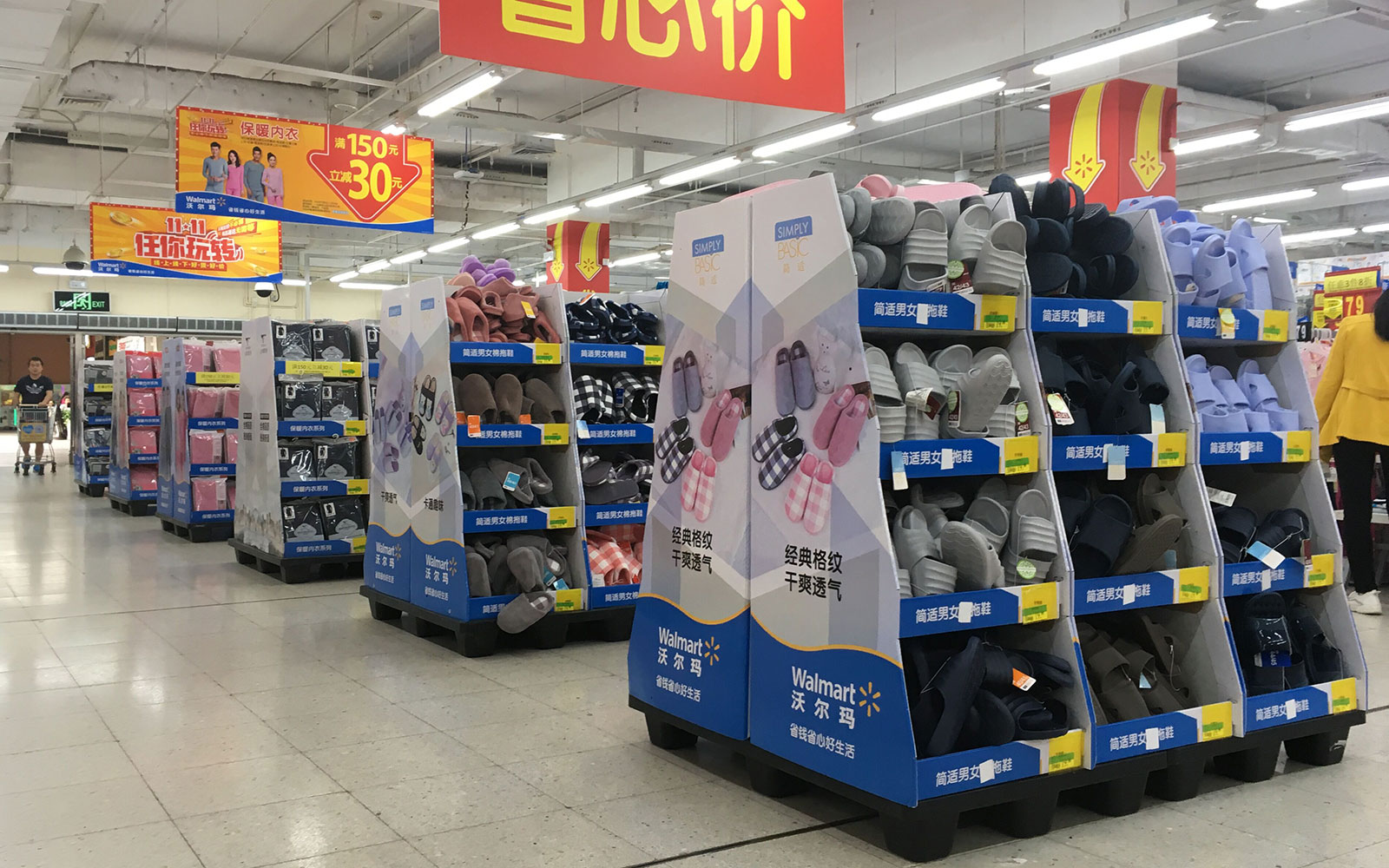
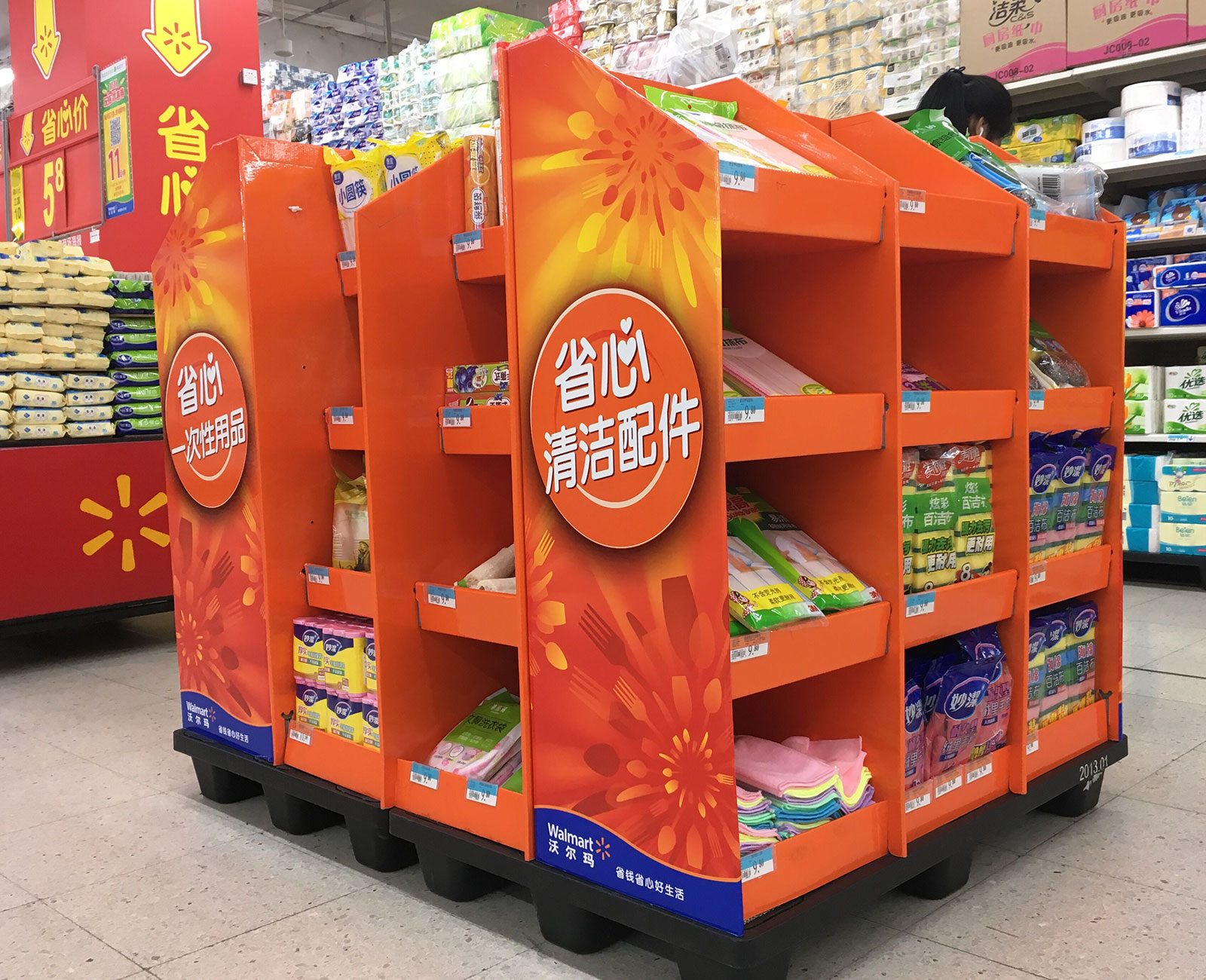
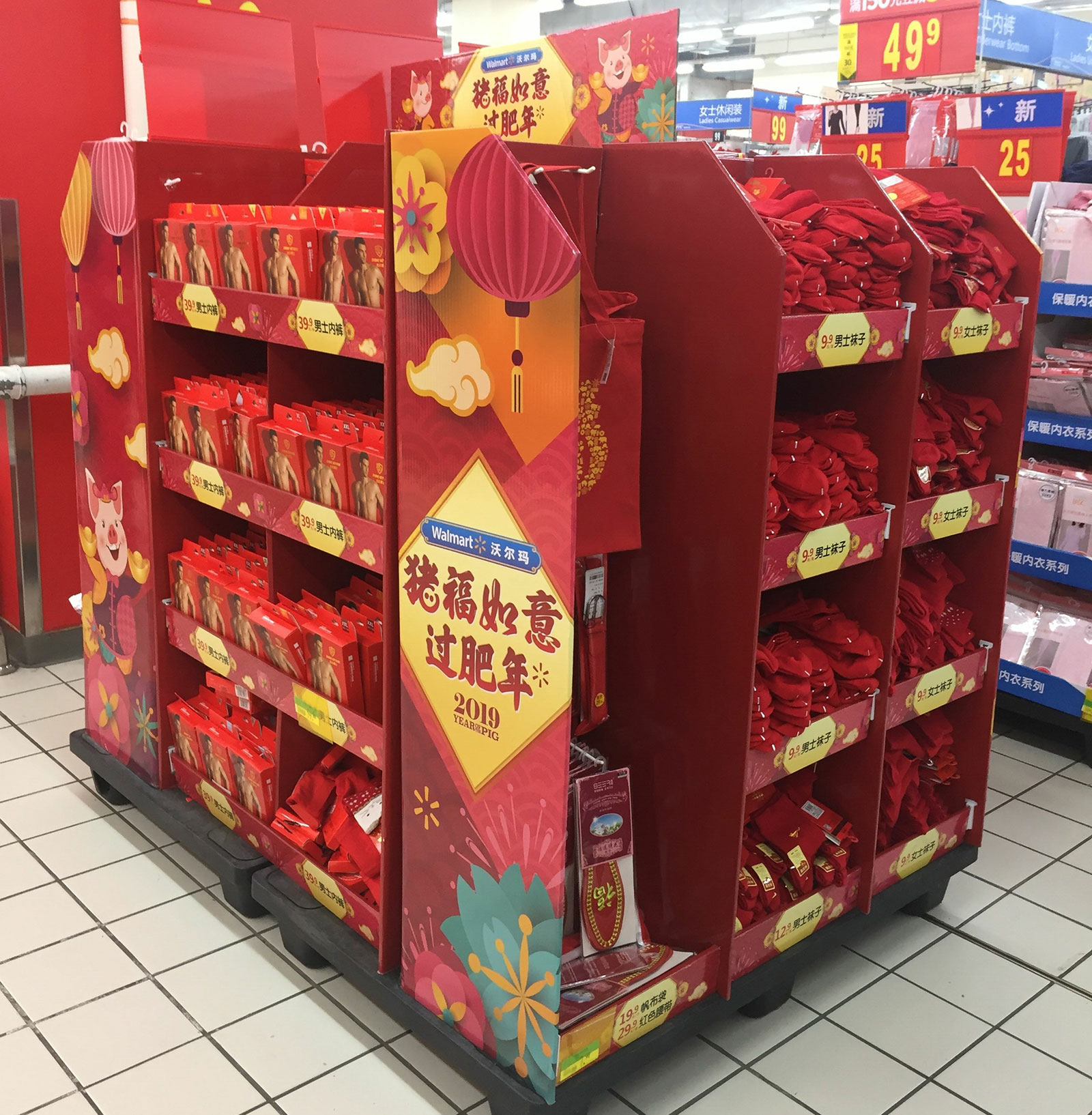
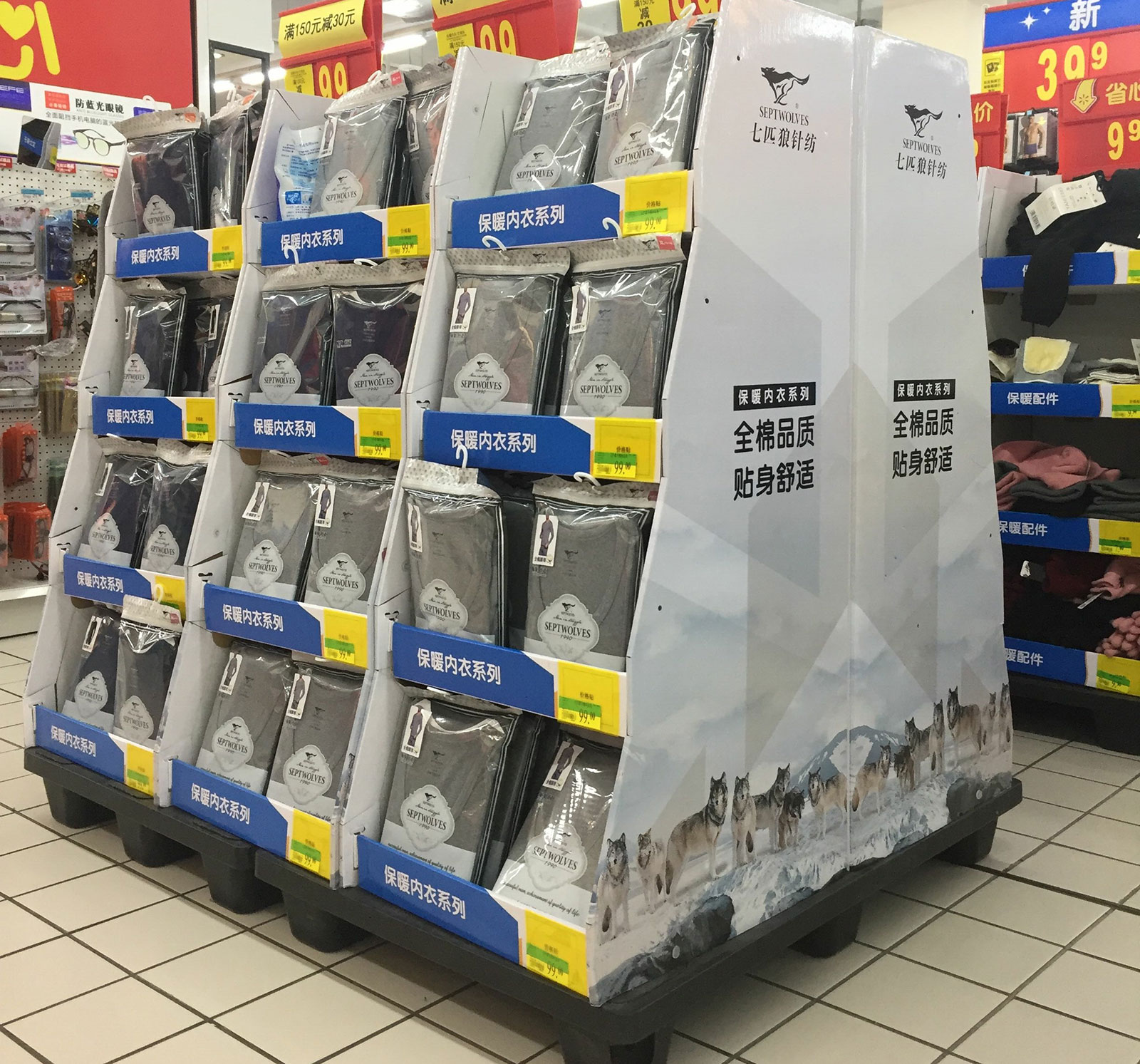
Floor displays with a small footprint suit heavier or multi-level products in tighter aisles. When designed with full-panel printing, they maximize brand impact relative to cost. These tend to be the workhorse format for new launches in grocery.
Bulk stack displays communicate value through volume. A palletized or floor-stacked display says "buy more" before a single word is read. They work well for durable items, high-volume SKUs, or anything positioned on price.
Paper Displays Versus Permanent Fixtures: The Honest Comparison
Corrugated paper displays have clear limits. For anything intended to last more than six months, used outdoors, stored in refrigerated or freezer environments, or carrying heavy product loads, plastic, wood, or metal are more appropriate materials. Trying to force paper into those scenarios results in structural failure and damaged brand perception.
Within their intended use case—short-cycle, in-store, ambient-temperature promotions—corrugated displays perform remarkably well. Kingwin Paper's digital print production requires no offset plate costs, making short runs of 500–2,000 units fully economical. Turnaround from approved artwork to finished display runs 7–10 business days. Full-color, high-resolution printing on white-top kraft or coated board produces graphics quality that reads as premium on shelf, even for brands with tight creative budgets.
The sustainability angle is increasingly relevant in retail placement decisions. Many major grocery chains now include sustainability criteria in vendor programs. Every Kingwin Paper display is 100% recyclable corrugated, which is worth raising directly in retailer sell-in conversations—it's a box that's easy to check.
Design That Works at Shelf Speed
Shoppers make visual decisions in about three seconds. A display that requires reading to understand what the product is has already lost most of its audience.
The most effective new launch displays lead with a clear consumer benefit—not a feature, not an ingredient—at the top of the structure where it's visible from ten feet away. "Better Sleep Tonight" lands faster than "Contains 5mg Melatonin." Bold, high-contrast color blocks help at distance. The "New" flag earns attention as long as the product is genuinely new; after a few months, it loses meaning and should be retired.
Practical readability rules matter more than brands usually acknowledge. For floor displays, keep all critical messaging above the 12-inch line from the floor—anything below that risks being blocked by adjacent product, carts, or simply falling below eye-level scan height. Light text on a light background, regardless of how good it looks in the design file, disappears under store lighting. Test the print under fluorescent light before approving production.
Structurally, simpler is better. Fewer folds, fewer clips, fewer assembly steps means fewer errors in-store, less shipping damage, and more consistent display appearance across locations. Kingwin Paper's design team follows a minimalist-structure principle on every project—clean enough to ship flat, rigid enough to hold product, and intuitive enough for any store associate to assemble without instructions.
Placement and Operations: Where Good Displays Fail
The display itself is only half of the equation. Poor placement and inconsistent maintenance can neutralize even a well-designed program.
High-traffic zones—store entrances, aisle ends, main cross-aisles, and checkout lanes—deliver the highest exposure per unit. Associative placement (cookies near cheese, chips near salsa, protein bars near fitness supplements) drives cross-category trial by meeting shoppers when they're already in a relevant mindset.
Operationally, the program lives or dies on compliance. Include clear assembly instructions—photographs, not text—inside the flat-pack. Build in enough stock capacity that the display doesn't look empty two days after setup. Confirm placement compliance through store photos or field team check-ins, especially in the first two weeks.
Testing Before Scaling
Before committing to a national rollout, run a structured test. Select a set of stores with similar foot traffic, demographics, and category velocity. Run the display program in half of them and treat the rest as a control group. Measure incremental sales lift—not just total sales—against the baseline.
A 15–20% lift is a strong result worth scaling. Below 10% usually signals a placement, messaging, or product-market fit issue worth diagnosing before investing in more units. Above 25% typically means the display is outperforming significantly, and scaling quickly to capture the window is justified.
Once volume commitments are established, transition from digital print to high-speed offset for additional unit cost savings. Kingwin Paper supports both production paths and can advise on the volume threshold where the switch makes financial sense for your program.
New product launches don't require heavy capital. They require precision—the right display in the right location, built for the right campaign window, with the right message. Kingwin Paper specializes in taking brands from structural concept to nationwide execution: display design, material sourcing, print production, flat-pack logistics, and assembly documentation, all under one roof.
For emerging brands trying to establish shelf presence without overextending the budget, that end-to-end capability means every dollar spent on display activation converts directly to in-store visibility—and in-store visibility is what turns a new launch into a bestseller.