As Kingwin Paper, a company specializing in paper display stands and paper packaging, all our products have obtained FSC certification, and we have deeply laid out the compliance system for the EU market. The following will clearly interpret from three core dimensions: the key differences between FSC and EUDR, whether FSC certification can replace EUDR, and how to meet customers' EUDR needs when we only have FSC certification, helping foreign trade businesses achieve compliant growth.
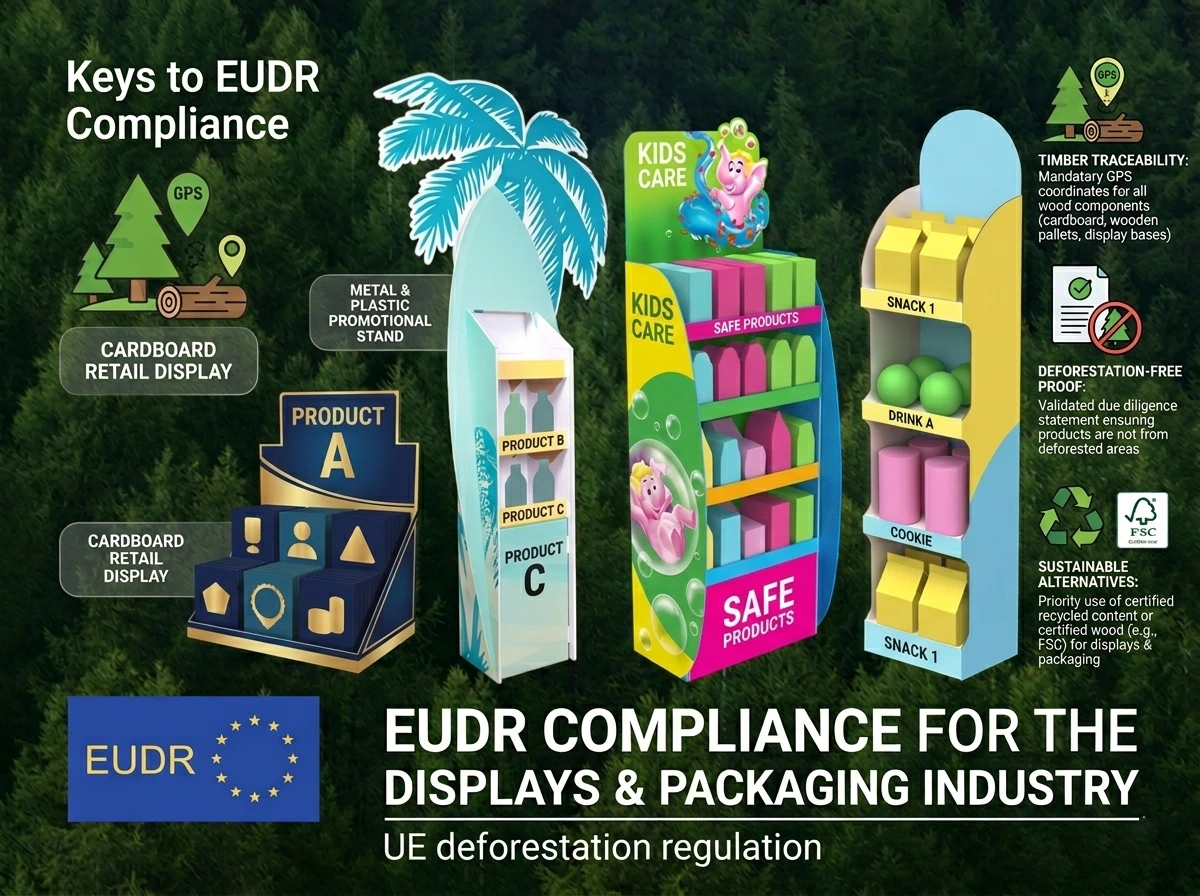
The packaging industry has weathered many waves of regulation — from REACH chemical restrictions to extended producer responsibility (EPR) schemes — but the EU Deforestation Regulation (EUDR, Regulation EU 2023/1115) is different in scope and ambition. It does not simply restrict a chemical compound or require a recycling label. It demands that every wooden or paper-derived product placed on the European market can be traced back to its forest of origin, and that forest must not have been cleared or degraded after December 31, 2020.
- What EUDR Actually Requires
- How EUDR Affects Kingwin Paper's Product Portfolio
- EUDR and FSC Certification: Differences, Overlaps, and the Gap That Matters
- Building a Traceable Supply Chain
- The Cost of Non-Compliance
- Compliance as a Competitive Differentiator
- Kingwin Paper's Path Forward
- Our Commitment to Responsible Manufacturing
For printing and packaging manufacturers like Kingwin Paper, this is no longer a distant policy discussion. After a one-year extension granted in late 2024, the deadline for full compliance is now December 30, 2026 for large and medium-sized operators, and June 30, 2027 for small and medium enterprises. With less than twelve months remaining, the window for preparation is closing fast.
What EUDR Actually Requires
At its core, EUDR is built on three non-negotiable pillars. First, the product must be deforestation-free, meaning the wood or pulp used in its production did not come from land that was converted from forest to agricultural or other use after the December 2020 cut-off date. Second, the product must be legally produced under the laws of the country where the raw material was harvested. Third, and most operationally demanding, a Due Diligence Statement (DDS) must be submitted through the EU's official TRACES platform before the product enters the EU market.
The regulation covers a broad set of commodities — wood, pulp, paper, rubber, palm oil, soy, cattle, and cocoa — along with all derived products. For the packaging industry, this means corrugated boxes, cardboard displays, folding cartons, shelf-ready packaging, and coated papers all fall squarely within its reach.
The DDS is more than a checkbox. It requires detailed product descriptions, the country of production, date ranges of manufacturing, and critically, plot-level GPS coordinates identifying exactly where the raw material timber was harvested. This geolocation requirement is the single most demanding element of the regulation, and it fundamentally changes how manufacturers must manage their upstream supplier relationships.
How EUDR Affects Kingwin Paper's Product Portfolio
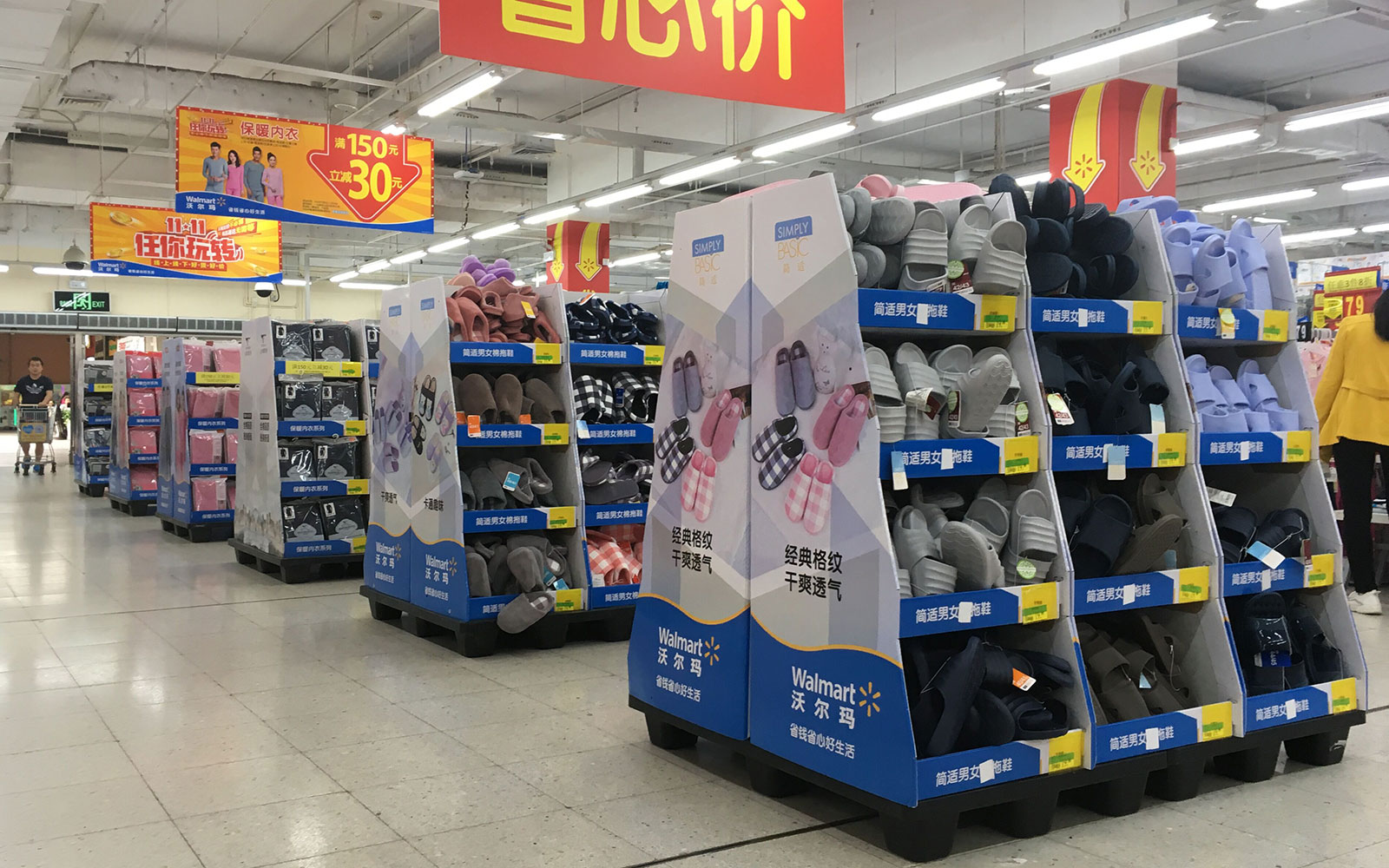
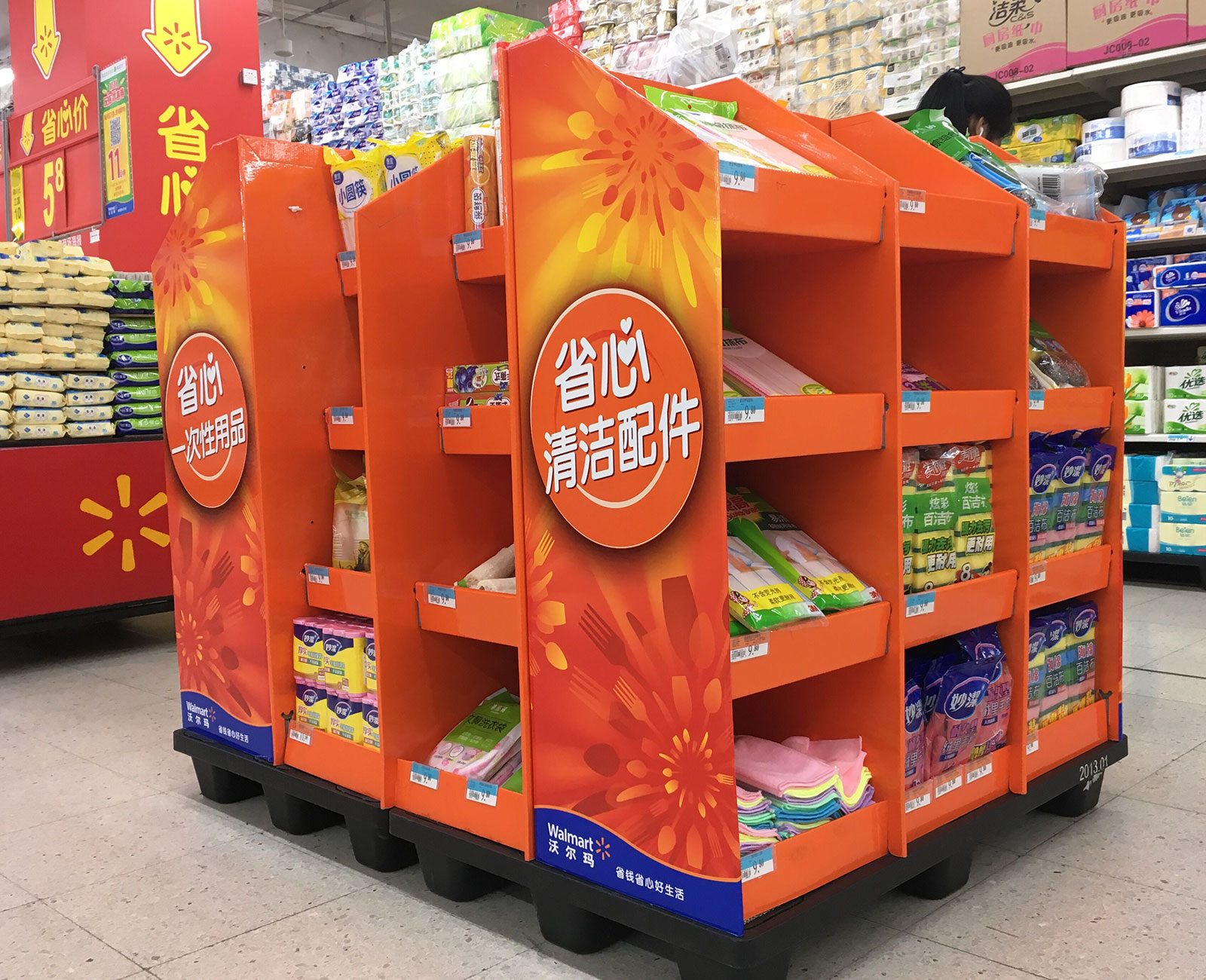
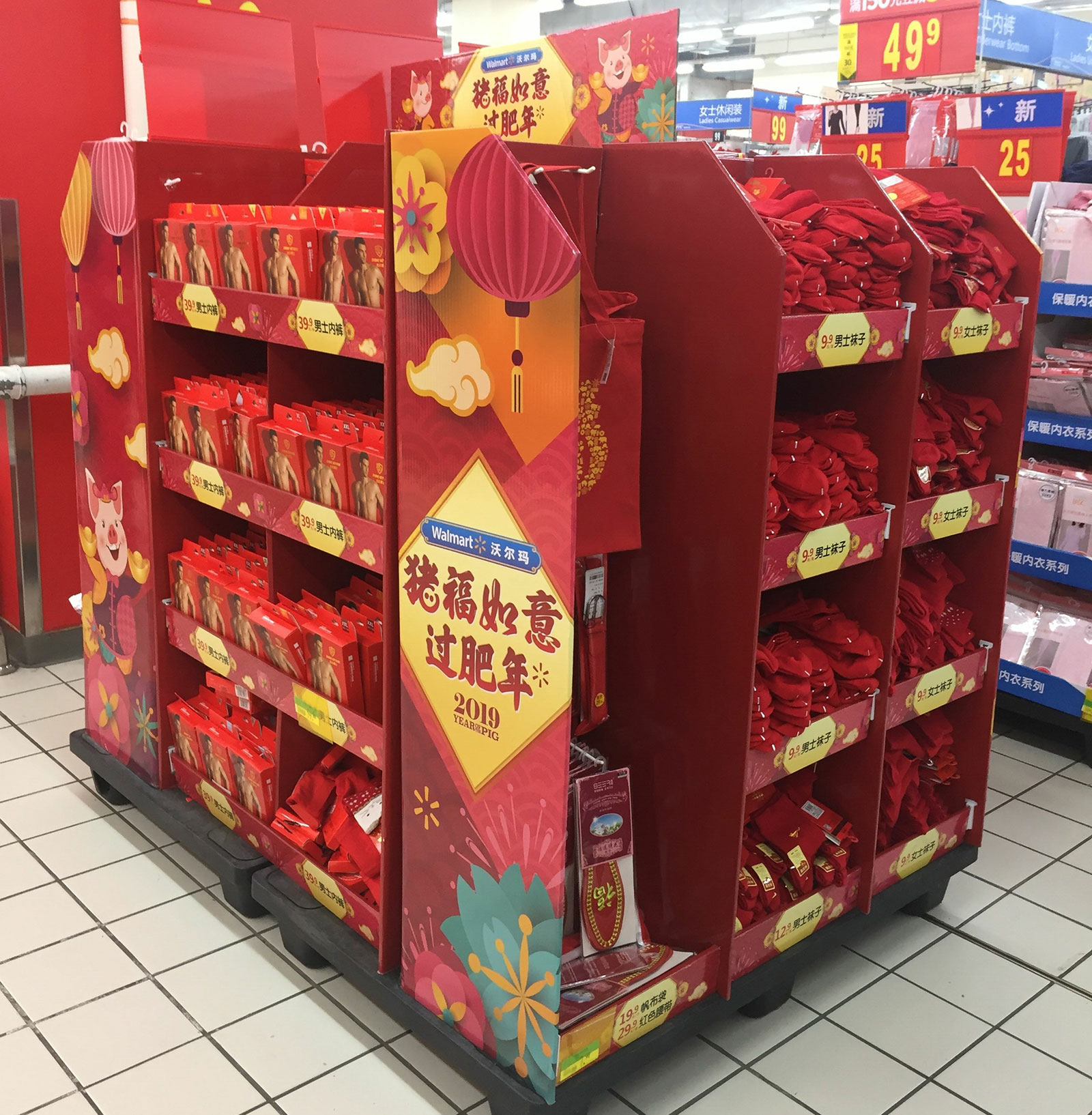
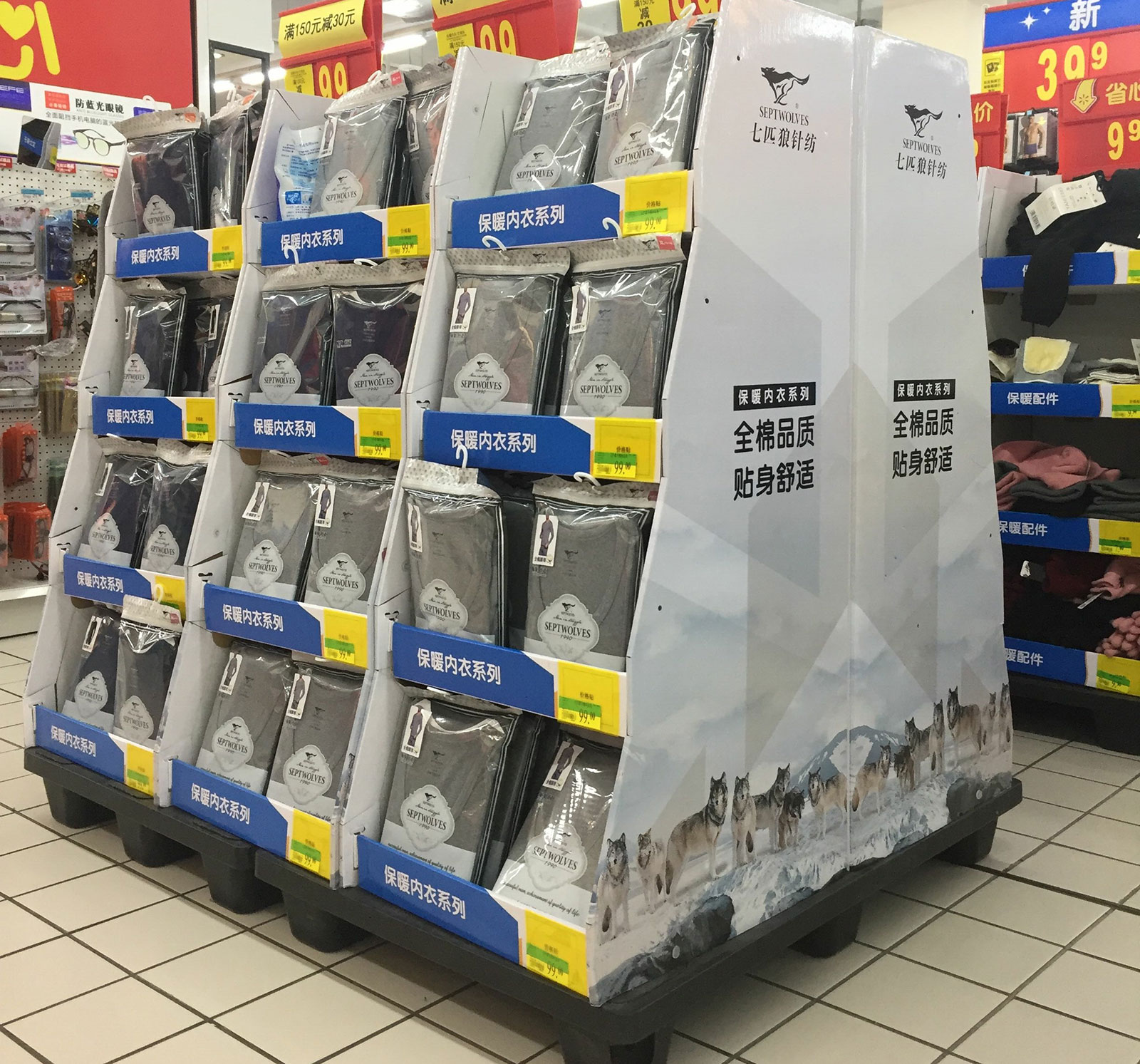
Kingwin Paper specializes in custom corrugated packaging and POP display solutions — counter displays, floor displays, dump bins, and shelf-ready packaging. These products are sold as standalone goods on the EU market, which means they are fully within the scope of EUDR. There is no blanket exemption for packaging simply because it "contains" another product.
A common misunderstanding in the industry is that secondary or transport packaging automatically qualifies for an exemption. In reality, the exemption only applies to packaging used solely as a physical container or protective wrapper around another product, and even then, operators must be prepared to justify that classification to authorities. For any product like a branded retail display or a custom cardboard counter unit — where the packaging itself is the product being sold — full compliance documentation is required without exception.
EUDR and FSC Certification: Differences, Overlaps, and the Gap That Matters
One of the most important — and most frequently misunderstood — questions in the packaging industry right now is this: Does FSC certification mean we are already EUDR compliant? The short answer is no, but the full picture is more nuanced and worth understanding carefully.
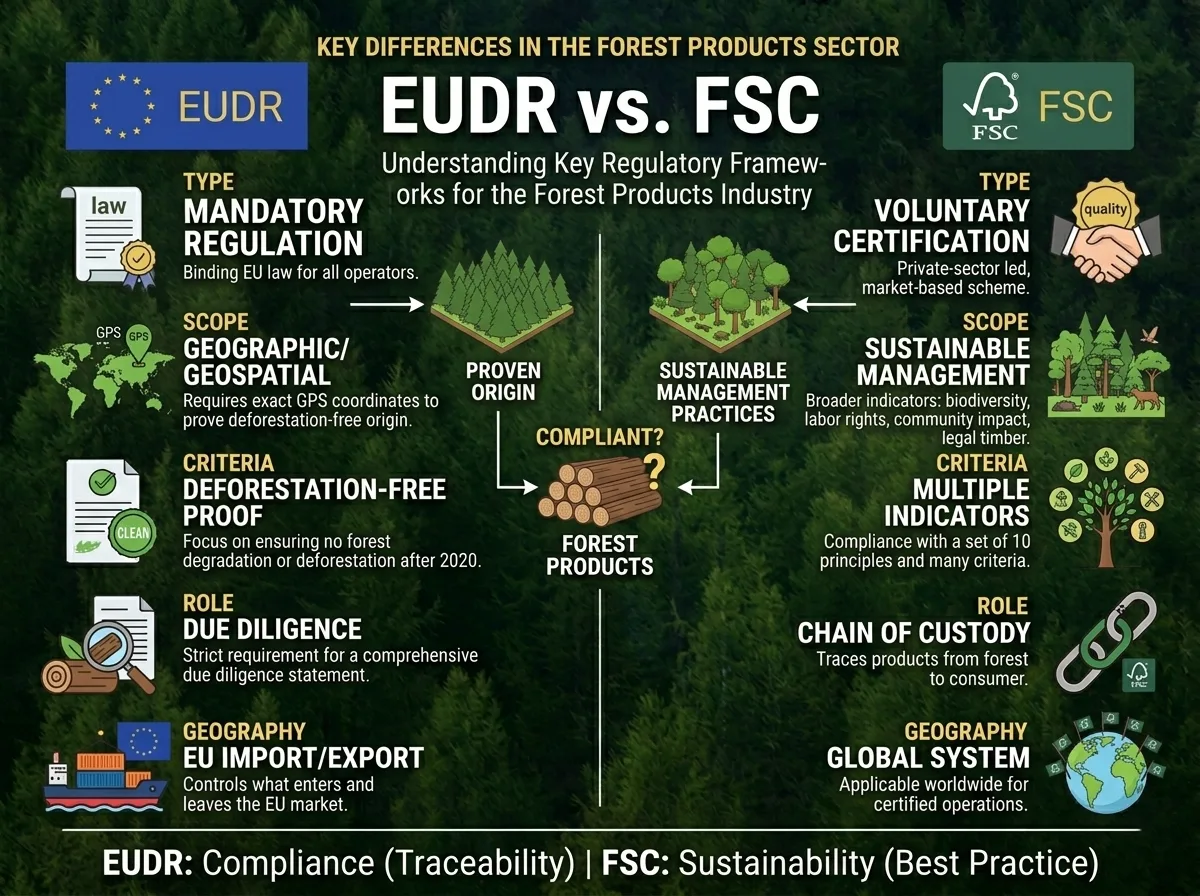
FSC (Forest Stewardship Council) certification is a voluntary, market-driven scheme that has been the global gold standard for responsible forest management and supply chain traceability for over three decades. EUDR, by contrast, is mandatory EU law, enforced by government authorities, with legal penalties attached. These two systems were built for different purposes, and while they share significant common ground, they are not equivalent.
Where they align is substantial. Both FSC and EUDR require that timber be legally harvested under the laws of the source country. Both demand a documented chain of custody from forest to finished product. Both prohibit sourcing from areas that have been illegally converted or degraded. FSC's existing certification infrastructure — particularly its Chain of Custody (CoC) standard — provides the kind of traceability framework that forms a strong foundation for EUDR compliance. For companies already holding FSC CoC certification, a significant portion of the due diligence groundwork is already in place.
However, the critical gap lies in the geolocation requirement. EUDR mandates plot-level GPS coordinates for every source forest area — a level of geographic specificity that FSC's traditional Chain of Custody system was never designed to capture or verify. FSC tracks the custody of timber through the supply chain, confirming that certified material has been handled and documented correctly, but it does not record the precise GPS boundaries of every harvest plot. This means that even a fully FSC-certified supply chain cannot, on its own, generate the geolocation data required for a EUDR Due Diligence Statement.
Furthermore, FSC certification only covers FSC-certified portions of a product. In a mixed supply chain — where some pulp is FSC-certified and some is not — the non-certified portions require entirely separate documentation and risk assessments under EUDR, regardless of the FSC label on the final product.
FSC has acknowledged this gap and responded by developing the FSC Regulatory Module, an add-on framework specifically designed to bridge FSC CoC certification with EUDR requirements. The Regulatory Module introduces enhanced traceability tools, integrates geolocation data collection into the certification process, and generates documentation structured to support EUDR due diligence submissions. For packaging manufacturers already invested in FSC certification, activating the Regulatory Module is the most efficient path toward EUDR readiness — avoiding duplication of effort and building on an existing compliance infrastructure.
It is important to note, however, that even the FSC Regulatory Module does not constitute automatic EUDR compliance. Only EU competent authorities can make that determination. What the Regulatory Module does is dramatically reduce the burden of evidence collection and risk assessment, and position companies to demonstrate compliance with greater confidence and less administrative friction.
For Kingwin Paper, the recommended strategy is clear: pursue FSC Chain of Custody certification as the foundational layer, activate the FSC Regulatory Module to address EUDR-specific geolocation and documentation requirements, and simultaneously work with upstream pulp and paper suppliers to ensure they can provide the necessary forest-level data.
|
Comparison Dimension |
FSC Certification (Forest Stewardship Council) |
EUDR (EU Deforestation Regulation) |
|---|---|---|
|
Nature & Positioning |
Voluntary third-party certification led by non-governmental organizations, applied for voluntarily by enterprises |
Mandatory regulation by the EU, compliance is required for related products exported to the EU |
|
Core Objective |
Promote sustainable forest management, balance ecological, economic and social benefits, and ensure the legality and traceability of raw materials |
Prohibit products related to deforestation/forest degradation after December 31, 2020 from entering the EU, and mandate supply chain due diligence |
|
Scope of Application |
Focus on forest products (wood, pulp, paper displays/packaging, etc.), globally applicable |
Covers 7 major categories of commodities (wood, beef, soybeans, coffee, etc.), only applicable to the EU market |
|
Core Requirements |
Third-party audit + Chain of Custody (CoC) certification to prove raw materials come from sustainable forests; precise geographical traceability is not required |
Mandatory plot-level geographical traceability (precise latitude and longitude), full-chain due diligence, risk assessment and mitigation |
|
Legal Liability |
Audited by certification bodies, enterprises have no direct EU legal liability |
Enterprises within the EU bear legal liability; violations can result in a fine of up to 4% of annual turnover and product ban from the EU |
|
Implementation Time |
Long-term valid, no mandatory deadline |
Effective for large enterprises from December 30, 2025; effective for small and medium-sized enterprises from June 30, 2026 |
Building a Traceable Supply Chain
Meeting EUDR's traceability demands requires Kingwin Paper to look beyond its own factory walls. The regulation requires documentation at every link in the chain — from the forest where trees were harvested, through the pulp mill, the paper manufacturer, and ultimately to Kingwin's corrugated products.
This means establishing systematic data collection practices with Kingwin's paper and pulp suppliers. For each batch of incoming raw material, suppliers must be able to provide the species and origin country of the timber, the harvest date, the GPS coordinates of the harvest plot, and evidence that the land was forested and not deforested after December 31, 2020. Suppliers who cannot provide this information present a compliance risk that Kingwin Paper must address — either by requesting audits, switching to certified suppliers, or commissioning independent risk assessments.
Managing this volume of documentation requires more than spreadsheets. Digital supply chain management platforms that support geospatial data, document storage, and version control are increasingly essential for manufacturers operating in global B2B markets. Investing in these systems now not only supports EUDR compliance but also strengthens overall supply chain visibility — a growing expectation from enterprise buyers across all sectors.
The Cost of Non-Compliance
The consequences of failing to meet EUDR requirements are significant and multidimensional. At the most immediate level, products without a valid DDS will be refused entry to the EU market, creating immediate revenue disruption and logistics costs. EU member states are mandated to conduct market surveillance, and penalties under national implementations of the regulation include substantial fines, confiscation of goods, and in serious cases, temporary or permanent bans from the EU market.
Beyond the legal penalties, the commercial risk may be even more consequential. European retailers, brand owners, and procurement teams are increasingly integrating EUDR compliance into their supplier qualification criteria. A packaging supplier that cannot demonstrate a clean, documented supply chain will simply not be shortlisted — regardless of price or production capacity. The regulatory deadline is also functioning as a forcing function for broader supply chain due diligence expectations that will persist and expand even after December 2026.
Compliance as a Competitive Differentiator
There is a commercial upside to early action. Among Chinese packaging manufacturers, EUDR compliance is still far from universal. Most companies are in early stages of awareness, let alone active preparation. For Kingwin Paper, achieving full EUDR compliance — and being able to communicate that clearly to EU buyers — is an immediate point of differentiation in a competitive market.
European brand owners that carry their own sustainability commitments, ESG reporting obligations, or Science Based Targets increasingly need suppliers who can contribute to — rather than complicate — their environmental disclosures. A fully compliant, FSC-certified Kingwin Paper becomes not just a capable manufacturer but a strategic partner. That is a fundamentally different value proposition than competing on price alone.
The same dynamic is beginning to emerge in North American and UK markets, where deforestation-free sourcing is moving from voluntary preference to procurement requirement. Companies that build the compliance infrastructure for EUDR today are positioning themselves for the next wave of similar regulations in other major markets.
Kingwin Paper's Path Forward
The path to EUDR compliance for Kingwin Paper is demanding but achievable within the available timeline if action begins now. The first priority is a thorough audit of current paper and pulp suppliers — understanding exactly where raw materials originate and what documentation already exists. This audit will reveal both compliant suppliers and those who present gaps requiring immediate attention.
Concurrently, Kingwin Paper should initiate the FSC Chain of Custody certification process, which typically takes three to six months from application to certificate issuance. Once FSC CoC is in place, activating the FSC Regulatory Module provides the EUDR-specific layer of geolocation data and risk assessment documentation. Internal systems should be upgraded to handle the ongoing collection, storage, and retrieval of supplier forest-origin data — not as a one-time exercise, but as a permanent operational process.
Our Commitment to Responsible Manufacturing
At Kingwin Paper, we believe that regulatory compliance and business performance are not in tension — they reinforce each other. EUDR is not a burden to be managed at the last minute. It is an opportunity to demonstrate the seriousness of our commitment to responsible sourcing, supply chain transparency, and long-term partnerships with the brands and buyers who share those values.
We are actively working with our supply chain partners to build the documentation infrastructure that EUDR requires, and we welcome conversations with current and prospective EU buyers about how we can support their compliance journey together. If you are sourcing corrugated packaging, cardboard displays, or custom retail packaging for the European market, contact Kingwin Paper today to discuss our EUDR readiness roadmap and what we can provide to make your compliance process seamless.