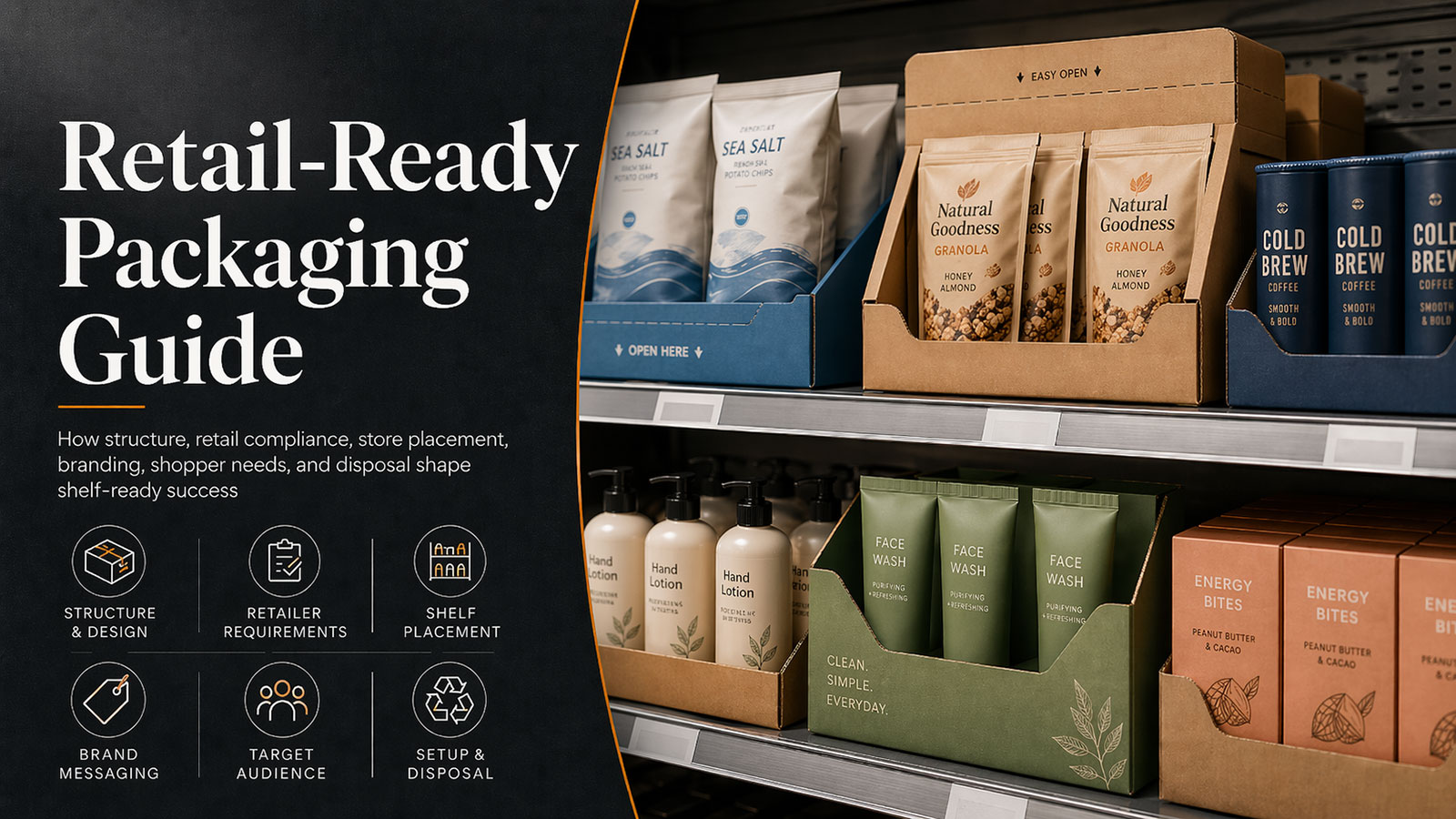
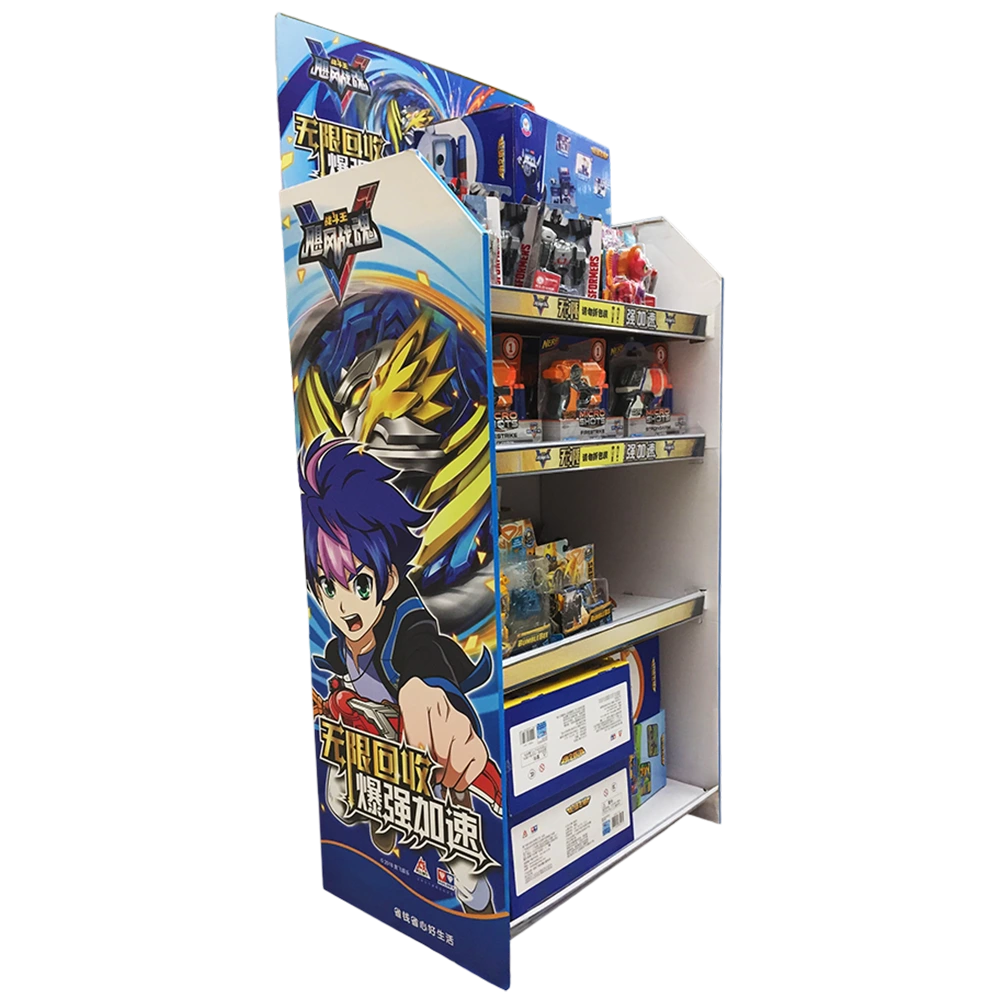

Walk into any well-run convenience store or pharmacy, and you'll notice something: the brands that catch your eye aren't always the biggest names.
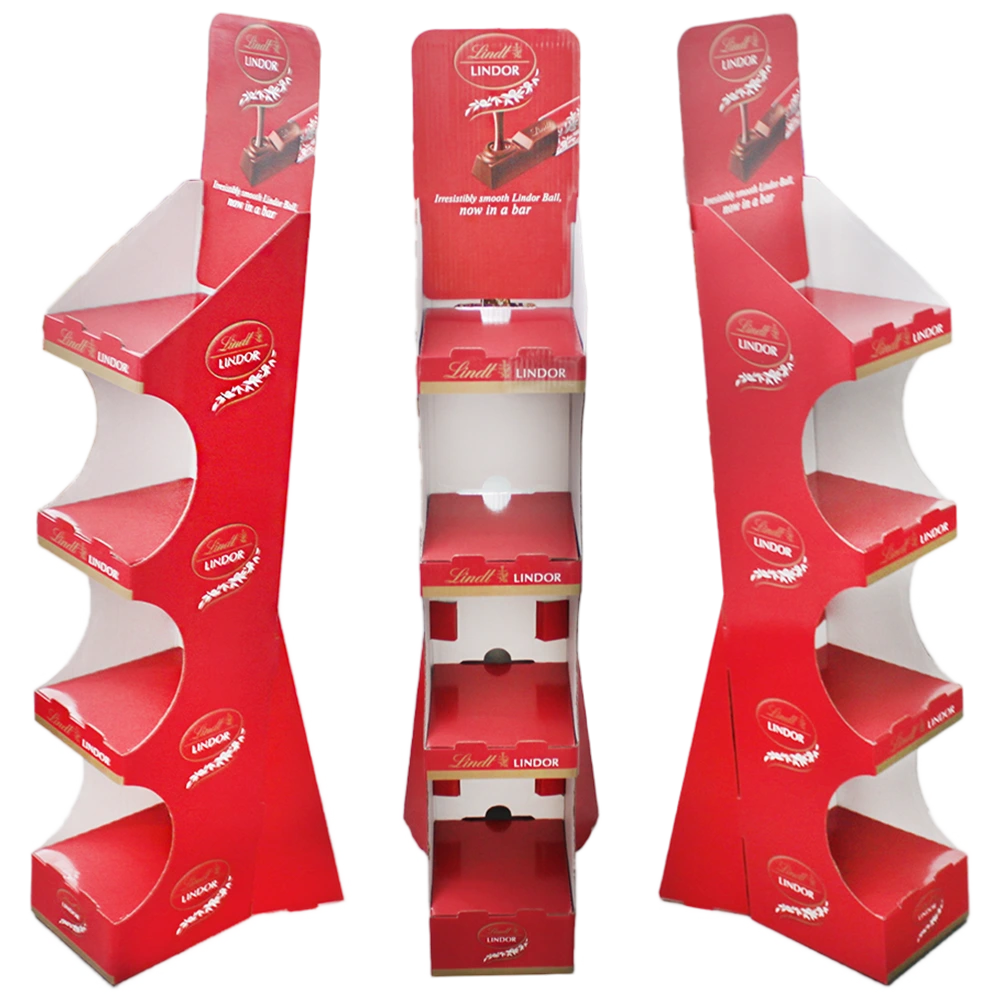
Often, they're smaller labels that figured out how to use their shelf space better—not by outspending competitors on fixtures, but by being smarter about presentation.
For emerging brands, multi-product paper displays are one of the most practical tools to close that gap. They ship flat, set up in minutes, hold an entire product line, and cost a fraction of what a metal or acrylic fixture runs. When the campaign ends, they break down for recycling.
At Kingwin, we've helped brands across snacks, personal care, supplements, etc., do exactly this—going from scattered shelf placements to cohesive, high-visibility displays that retailers actually want in their stores.
Why Paper Displays Make Sense for Growing Product Lines
The real advantage over metal or plastic isn't just price—it's flexibility.
A rigid fixture locks you into one layout for months. A corrugated display can be redesigned between product launches, updated for seasonal promotions, and reordered quickly when a product unexpectedly takes off.
Production lead times for paper displays run significantly shorter than rigid alternatives. That matters when you're trying to hit a holiday window or respond to a sudden retail opportunity that didn't exist in last quarter's plan.
Because material costs are lower, brands can test new display concepts without committing to large-scale investment—useful when you're still learning which products actually move in which retail environments.
From a sustainability angle, corrugated paper is among the most recycled materials in the packaging industry. For retailers with environmental sourcing guidelines, this is increasingly a practical requirement, not just a nice-to-have. Kingwin's displays are made from FSC-certified materials, meeting the sourcing standards of major retail chains.
4 Display Formats and When to Use Each
Choosing the right format starts with three questions: How large are your products? How much space will the retailer give you? And what behavior are you trying to trigger—browsing, comparing, or impulse grabbing?
Floor-Standing Displays
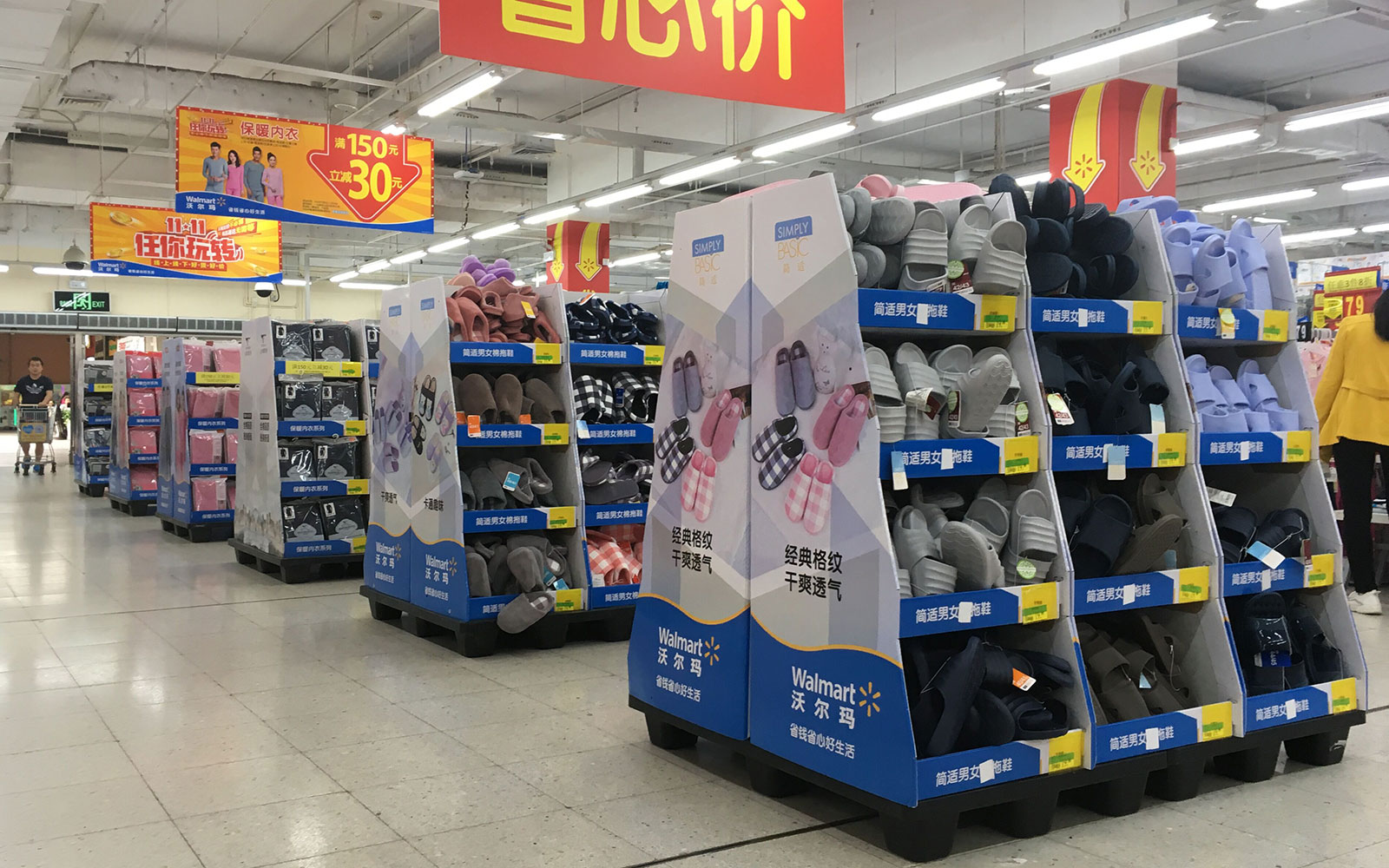
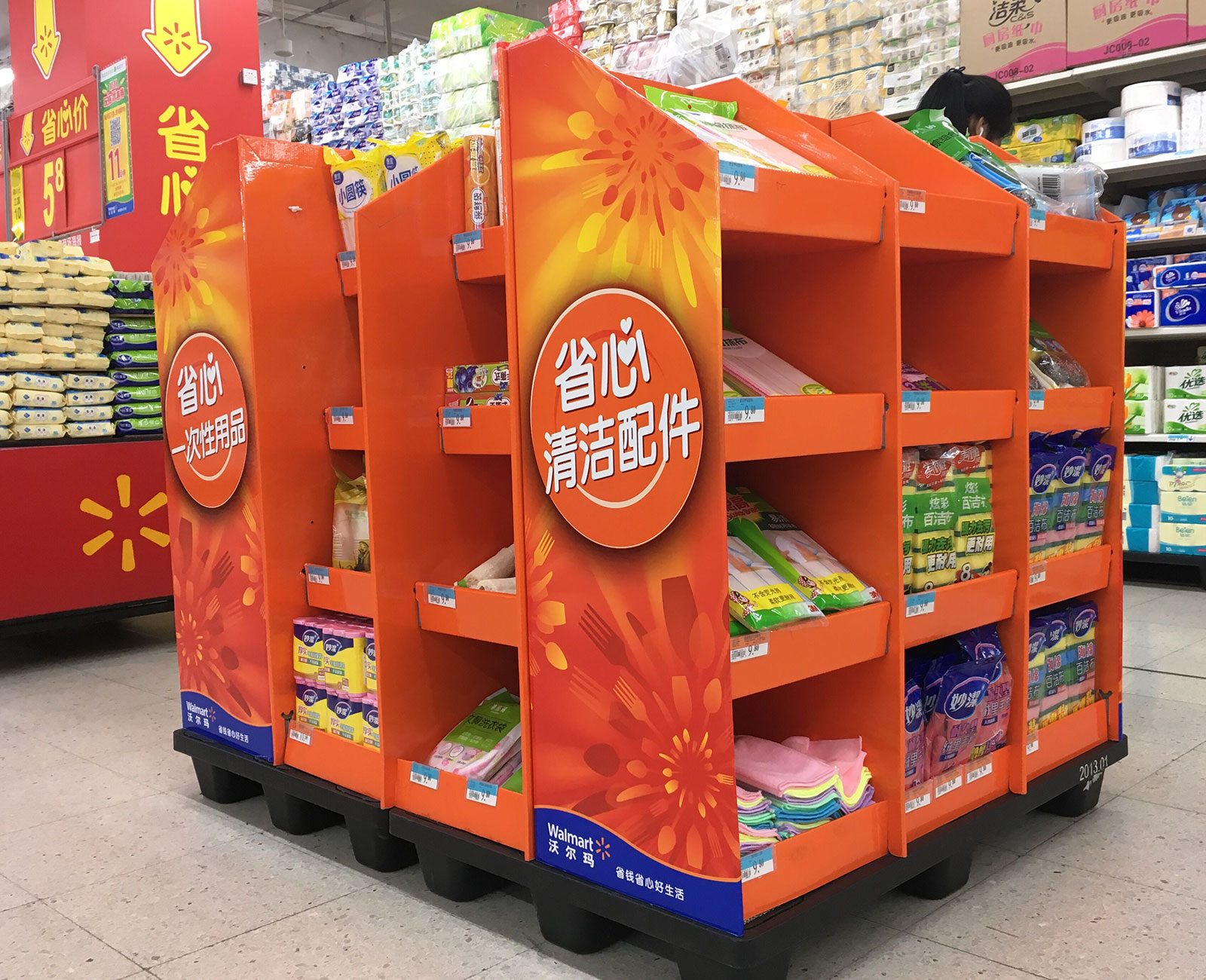
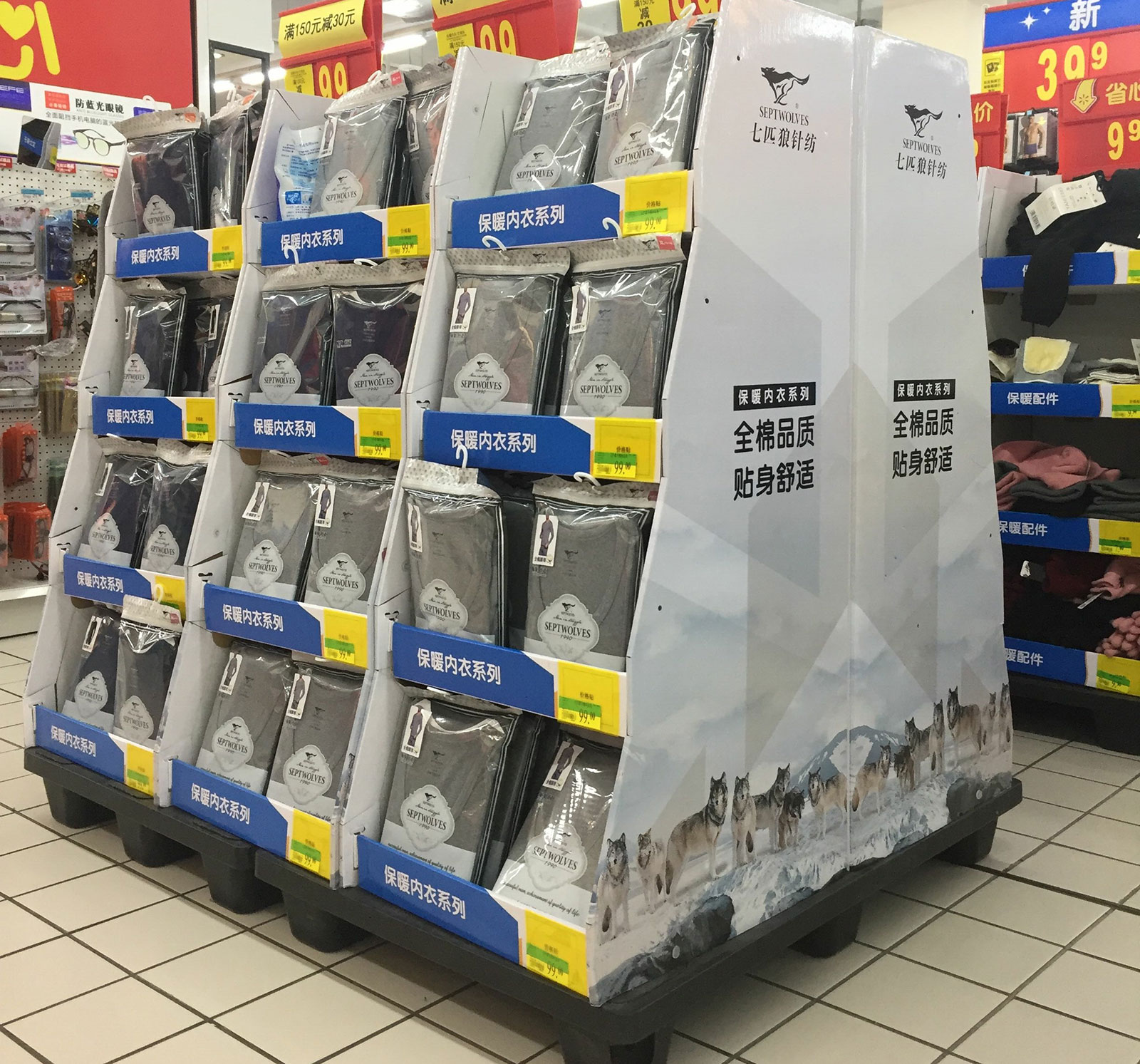
Floor displays are the workhorse of multi-product showcasing. A single unit can hold products across multiple sizes, SKUs, and price points—turning a corner of a store aisle into a dedicated brand section.
They work best in stores with wider aisles and open floor areas. For brands trying to communicate a full product range rather than spotlight individual items, there's no more efficient format.
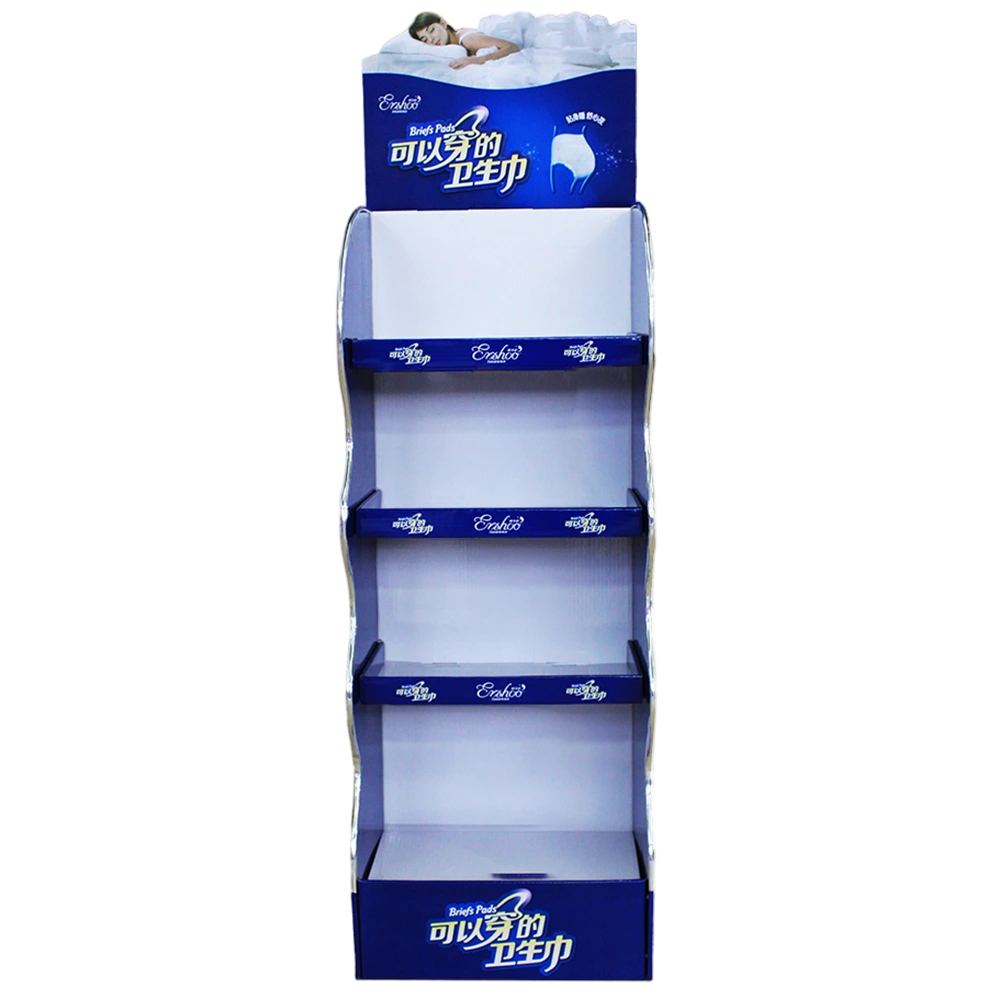
Our client A, a supplement brand, partnered with Kingwin to design a floor display consolidating 5 SKUs previously scattered across retailer's shelves. After placement at aisle location, the display drove a 20% increase in weekly units sold. Retail buyers noted it made restocking easier and reduced out-of-shelf incidents
Countertop Displays
Compact, targeted, and built for impulse.
A countertop unit near a checkout counter is one of the most effective ways to move small-format products—candies, lip balms, travel-size items, single-serve packets. Customers waiting in line are already in buying mode. A neatly organized tray of relevant items is hard to ignore.
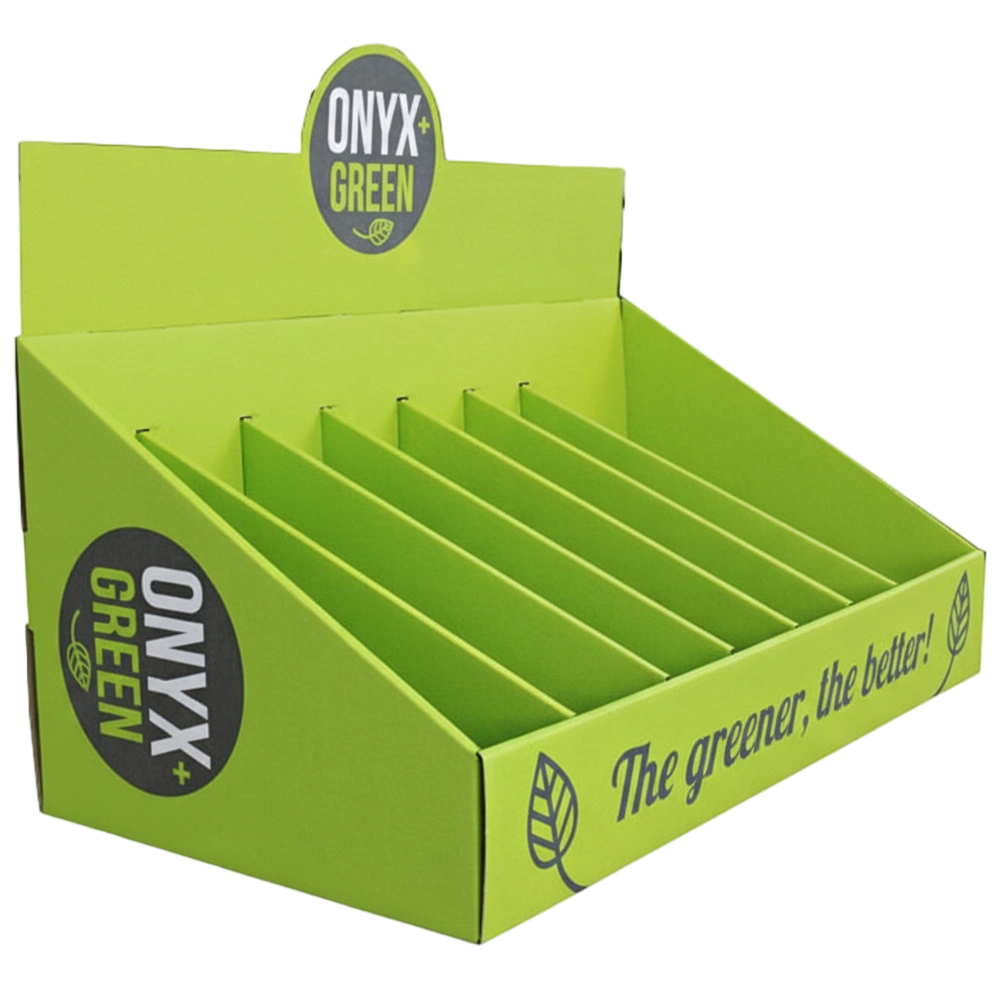
The key is keeping the product assortment tight and the display uncluttered. Too many options at a checkout counter creates hesitation instead of impulse.
End-Cap Displays
End-caps are prime retail real estate. Nearly every customer walking through a section passes them, which makes placement here worth competing for.
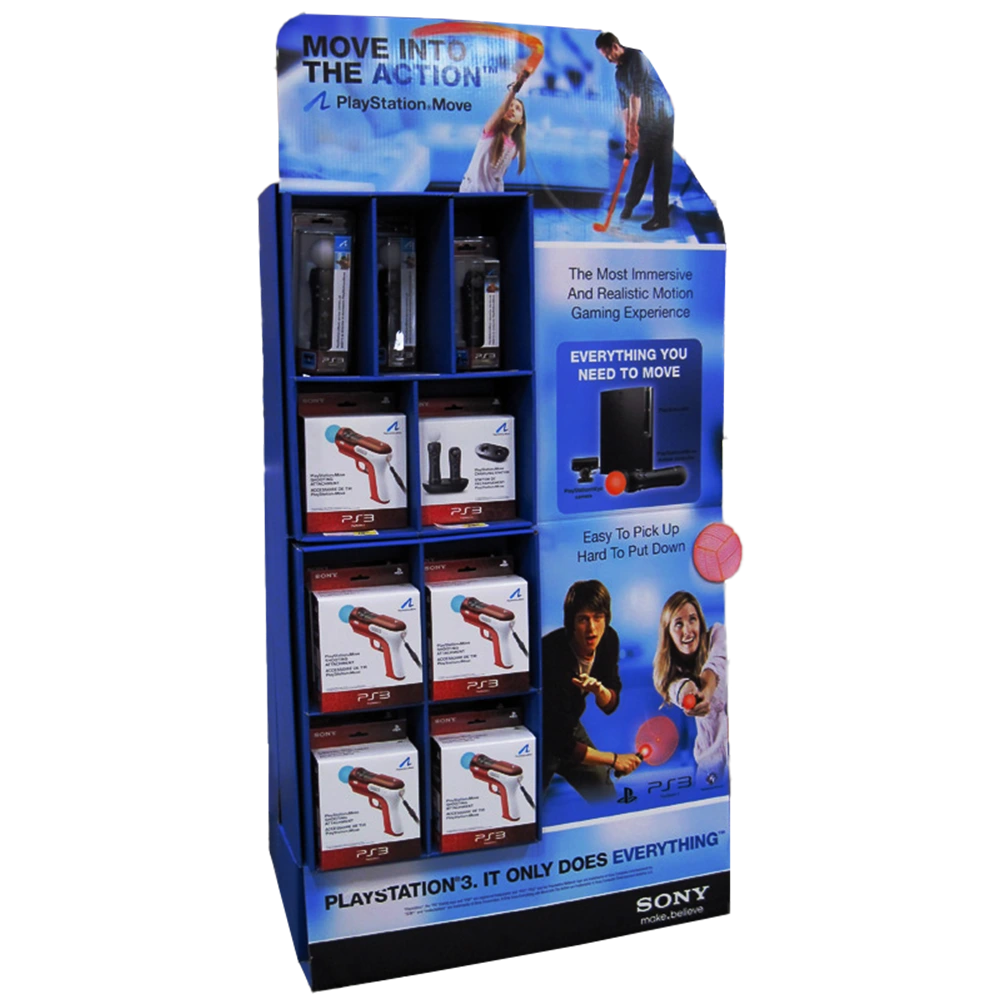
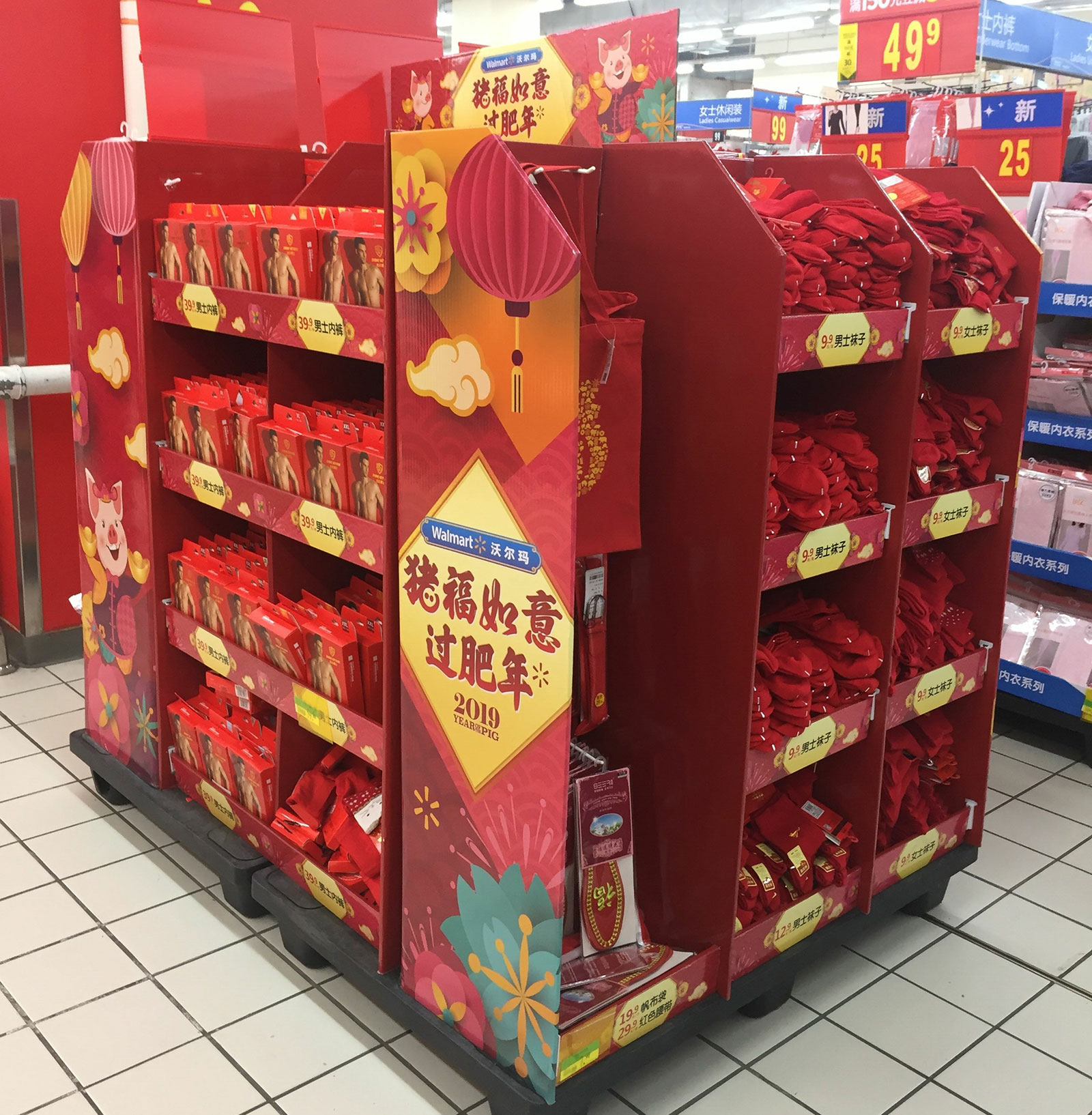
A well-built paper end-cap layers multiple products in a clean, structured way—visually compelling without feeling chaotic. This makes them ideal for seasonal launches, high-margin SKUs, or any product where velocity matters.
The structural design has to work harder here than anywhere else. Products get handled frequently, and a display that looks disorganized after two days of customer interaction defeats the purpose.
Sidekick Hangers
When floor space isn't available—and in many competitive retail environments it simply isn't—sidekick hangers attach directly to existing shelves and add display capacity without requiring any floor footprint.
They work especially well for cross-merchandising. Placing a complementary product next to a category leader intercepts a buying decision that's already in progress. Common examples: travel adapters next to luggage tags, honey packets in the coffee aisle, small skincare items near hair care.
The placement itself does part of the selling. The display just needs to keep things organized and visible.
Design Details That Separate Effective Displays from Forgettable Ones
A display that looks cluttered or unstable within 48 hours of setup does more harm than good.
Structure first. Custom dividers and tiered shelving keep products organized even after customers have touched and replaced items dozens of times. Without structural organization, a multi-SKU display looks like a clearance bin by end of day.
Lead with what the product does, not what it is. Benefit-focused copy outperforms feature lists in high-traffic retail environments where decisions happen in under ten seconds. Answer one question clearly: why does this product matter to the person standing in front of it right now?
Add context where it's needed. For categories that require explanation—supplements, specialty foods, skincare devices—a short usage guide or QR code linking to a how-to video reduces hesitation. Customers who understand what they're buying are more likely to follow through.
Don't cut corners on structural integrity. Reinforced bases, proper load testing, and surface coatings that hold up against humidity and repeated handling aren't optional for retail environments. A display that visibly sags or tips undermines the product and the brand simultaneously. Kingwin's structural engineering process includes load-bearing tests to ensure displays stay retail-ready for the full campaign duration.
Placement and Refresh Cycles
Even the best display underperforms in the wrong location.
Prioritize placement near complementary categories, in natural stopping zones, and at eye level for your target customer. If your retail partner shares traffic or sales data, use it—the difference between a display at a natural stopping point versus an awkward back corner is often measured in meaningful unit volume.
On refresh cycles: static displays lose their pull faster than most brands expect.
Swapping in updated graphics, seasonal messaging, or a reorganized product layout every few weeks keeps the fixture feeling current. Retailers notice when a brand actively manages its display program—it signals investment and tends to earn better placement over time. Kingwin's quick-turnaround reprint program makes refreshing an existing display structure straightforward, without requiring a full reorder.
Why Work With Kingwin
There's a meaningful difference between a supplier who prints and cuts corrugated board and one who understands how retail environments actually work.
Kingwin has spent 15+ years producing displays for brands, which means we've seen what holds up in a high-traffic grocery aisle and what doesn't, what print finishes survive a humid warehouse before reaching a store floor, and what structural decisions create assembly problems at the store level that nobody catches until it's too late.
Our process covers the full range: structural design and prototyping, print production with matte lamination, spot UV, digital, offset, etc., flat-pack logistics, and assembly documentation clear enough that store staff can set up a display without calling anyone for help.
For brands scaling into new retail channels or launching across multiple regions simultaneously, we also offer consolidated shipping solutions that reduce logistics complexity significantly.
If you're planning a product launch or retail campaign and want to see what a display solution would look like for your specific line, contact us to get started.
For brands working within tight budgets, paper displays remove the false choice between cost control and effective merchandising. Done well, they create organized, visually compelling product presentations that compete directly with permanent fixtures—without the upfront investment or inflexibility that comes with them.
Kingwin builds displays that work when they reach the store floor—structurally sound, visually on-brand, and designed to move product from the first day they're set up.